
How can film screenings become the welcoming spaces organizers need: places where people feel invited in, and leave feeling like they belong? In this conversation, Working Films’ Director of Campaigns and Strategy, Andy Myers, chats with Daniel Solorzano with Amanecer in El Paso, Texas and Warren Tidwell with Alabama Center for Rural Organizing and Systemic Solutions (ACROSS) about what it takes to create spaces that break down barriers, dissolve left/right binaries, and give more people a sense of ownership in our movements.
These two organizers were part of the 2025 Rural Cinema cohort, who received training, funding, and ongoing support from Working Films as they put on film series tied to their environmental justice work in their rural communities, and we’re excited to share their insights with you.
This is the first blog in our new interview series where we sit down with organizers who are out there doing the work. We hope these conversations offer lessons for anyone looking to strengthen their organizing, whether through film screenings or other ways of bringing new people in.
Read on to learn how creating neutral ground and spaces of belonging helps organizers reach everyone, because it’s going to take all of us to win.
Andy: Thanks to you both for meeting with me today to discuss your experiences organizing with film this year. To get us started, can you both share who you are and why you hosted a film series with us?
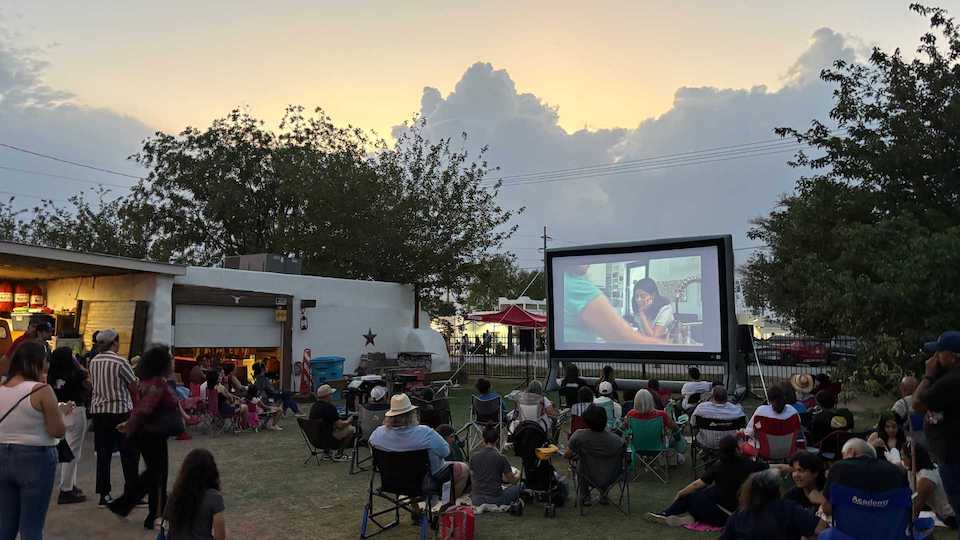
Daniel: I’m part of an organization in El Paso called Amanecer People’s Project, which is a community and power-building organization. We work to move decision making power into the hands of community members who are living with the effects of pollution and climate change. We used the film series to grow our base outside of the city, especially in the Lower Valley, where there were local issues around agriculture and eminent domain. The screenings were a way to bring people together, introduce them to our organization, and work with them on solutions.
Warren: And I’m with ACROSS, which works throughout Alabama to create new ways of solving old problems in small towns. We hosted a film series in Camp Hill and Parrish, Alabama, to give people places to gather. We wanted to create opportunities for people to come together in spaces that really no longer exist in these small towns where we work, you know, the high schools have been shut down, and the businesses have shuttered and left, and more often than not, the only time you see your neighbor is when you’re driving by in town and you wave.
Andy: And why the emphasis on these in-person gatherings where people meet face-to-face?
Warren: Camp Hill has an amazing history, and a history that was, in many ways, taken away from residents. This is the first place where people of non-European descent organized for labor rights. But because so much of that history has been rewritten or downplayed, people weren’t talking about it. People also weren’t talking about the issues everyone is dealing with. Instead, conversations were happening inside homes and behind closed doors. That creates silos and divides. By showing short films on the town’s history, we saw how excited people were. And doing it in a space where people were also coming together and able to talk about their concerns and their ideas and their hopeful plans was a major part of this.
 Daniel: In West Texas, a lot of local politics feel combative. People are ready to constantly argue with each other. That only divides us and makes us less powerful. We came into this knowing we needed to bring people together. We were working on a campaign where a new road was going to cut through town, and homes would be taken through eminent domain. It’s been hard to build trust with that audience, which is more conservative, farmer communities. We can say “we’ve won campaigns like this before, we should work together” but the trust isn’t there. But when we can make these personal connections at these film screenings, none of those political differences really matter. We are all dealing with these same problems, that stuff shouldn’t matter, and it’s working, these face-to-face events are bringing people together, and we have time to make those personal connections.
Andy: Warren, I know in your community there’s a right-left binary too. How did your film events tear down those walls and create more neutral ground?
Warren: Parrish is coal country. Many folks describe themselves as conservative even though they share progressive values. That makes conversations hard. People put walls up. We showed some very progressive films. But when you present them in a way that isn’t antagonistic or attacking, it allows for more polite, honest conversations. You’re never going to yell anyone into agreement. Hunters here are deeply committed to conservation, but they’re scared of being tied to “environmentalism.” At heart, they’re environmentalists. The films gave us a context to talk. There’s just something about sitting down with popcorn and candy that doesn’t feel like an episode of Newsmax. It created a space to have tough conversations in Parrish, and to educate Camp Hill residents on their own history. The films made it easier.
Daniel: I felt the same way. People can’t have good conversations anymore, everything is antagonistic. I didn’t want people to feel attacked coming to screenings, because people have felt that way walking into organizer meetings before. That makes it hard for them to feel like they can be a part of this.
Andy: Definitely, ok so we’ve talked about the films themselves, but what else are y’all doing to make these spaces welcoming? Warren you mentioned popcorn and candy, what else?
Warren: Well, the food thing is important. That’s one thing, all Southerners speak that language and we’ve got a lot of our meemaws and other people who cook who do amazing things, having space to break bread together is important. And these communities were, for lack of a better word, hungry for something new. We also used the screenings as a recruitment tool. We said: “Don’t just complain about the problems. Here are ways to get involved.” We were able to recruit people to start taking on all these different local issues, because when you organize in a place like this, you have to take advantage of every opportunity to reach people and build around the things that you want for the community. There is something with the food and the film. People come in with their guard down, they’re not really coming in with an agenda like they’re going into a city council meeting with something that they want to talk about. So, yeah, that’s what we did. While we did make it about local issues and politics, we did it in a way that was fairly benign and could be connected to everybody that was there.
Daniel: Yes. First off, the food. I don’t know if it’s also a West Texas thing, but people love food and Mexican food in particular, so that’s something that we stress, to always bring food to our events to make it a more welcoming environment. Also making sure there are things for kids too. Parents want to bring their kids to a space where they feel comfortable. Another thing that really resonates with me that you said is, a lot of people complain about a lot of things that happen in their communities, but no one really does anything. It’s hard to do something because the spaces feel intimidating. I used to be that person. I’d argue with my conservative dad every day, but I wasn’t doing anything. When I finally went to organizer meetings, I felt like I didn’t know enough. There was political jargon, and it made me feel like I wasn’t smart enough to be there. Like I didn’t belong. So that’s why I made it a really big point to have everyone feel welcomed at these screenings. I made sure all the organizers were just having normal conversations. I told them to just talk to someone in a normal way. Like Warren said, ask: “what problems do they feel like they want to fix? And how?” Everyone comes in with something they care about and want fixed in their communities. If we can talk about those things to people and develop a plan on how to fix them, people will want to be there and stay involved.
Warren: One thing that I hear a lot of people using now is this language of belonging, a place of belonging, a sense of belonging, and without even realizing it, that’s the kind of work we were doing, right? If people feel like they belong, and they’re going to feel safe, then it’s likely they will feel a part of what we’re building.
Andy: Daniel, I know this work is newer for you, and you found yourself in other organizing spaces as someone trying to get involved. What were they doing wrong?
Daniel: It’s hard to pinpoint, but really, I just felt intimidated. I felt like when I got to these meetings, that I didn’t know enough. I didn’t know enough of how to talk and how to represent myself. Not being able to really understand what was going on immediately when I got there was something that I thought about a lot. So for our screenings, I made sure to just have a normal conversation with someone, just talk in a normal way, and still bring up all these points, but slowly teaching and sharing about the issues.
Warren: We say it all the time: you can’t expect people to know all the words. You know when you belong, because someone has put thought into the event. A perfect example: an organization wanted to do a gathering in rural Alabama. The agenda included breathing exercises. Now, don’t get me wrong, I’m a fan. I can do that, that’s fine. However, you’re asking 60-year-old working-class folks to close their eyes and fill their feet connected to the ground, right? You’re putting what you enjoy onto them. And yeah it didn’t go well.
Daniel: This happens everywhere. That point that you made with the breathing exercise is really funny, because with this other thing that we’re working on with eminent domain, it’s a lot of conservative older men who ride horses and are wearing boots and probably have dip in their mouth. They’re not really wanting to come and have a breathing exercise, or talk about how they’re feeling and their feelings. And it’s hard to say let’s not do that, because those are good things. Those are good things for everyone but you need to know the time and the place. I think understanding how people work, and how people feel about certain things is really important, you have to meet people where they are.
Warren: Well, it’s like when we put our food together, we always have vegetarian and vegan options, right? It’s the consideration that is being put into the event that matters. We’re a pluralistic society. You can’t plan for everything, but people notice when you’ve gone the extra mile. We had cold metal chairs and chilly weather, so we pulled cushions from the church to make the chairs comfortable. I only know what to do now because I’ve often done the wrong thing and learned from it. But the main thing is: you can’t come in with your idea of what you want, without considering what the audience needs.
Andy: And why does any of this matter? Why put in the energy to make spaces welcoming, now we’re moving chair cushions?
Warren: If we don’t solve this issue where I live, where these vacuums are being filled with extremism every day. If we don’t figure this out, we will pay a heavy price. The solution isn’t obvious or easy, but it starts with bringing people together so they see each other’s humanity. You can’t dehumanize someone who’s right in front of you.
And when you’re talking about your lived experiences and figuring out how much you share in those lived experiences, around a possible film or documentary that speaks to the issues your community faces, it’s powerful. They see a more complete picture. They understand that all of this garbage in right-wing media is exactly that, garbage. They see their trans, queer, and non-binary neighbors as the people who make their food, ring them up at the store, people who, in my experience, have worked harder for communities that supposedly hate them than anyone else I’ve worked with. There’s no obvious solution. But it starts with bringing people together. And what better way than around a movie?
Daniel: Absolutely. Bringing people together is everything. We’re stronger together. We’re never going to win if we’re divided. If you can bring everyone into a space, people who agree with you and people who don’t, you’re in a much stronger position to solve the issues that matter to everyone.
The powerful screening events Daniel and Warren spoke to were part of Working Films’ Rural Cinema program, which was made possible with generous support from the Putnam Foundation and the Zain Jaffer Foundation. Rural Cinema is shifting for 2026 and is now called Screenings that Work. Find out more here!