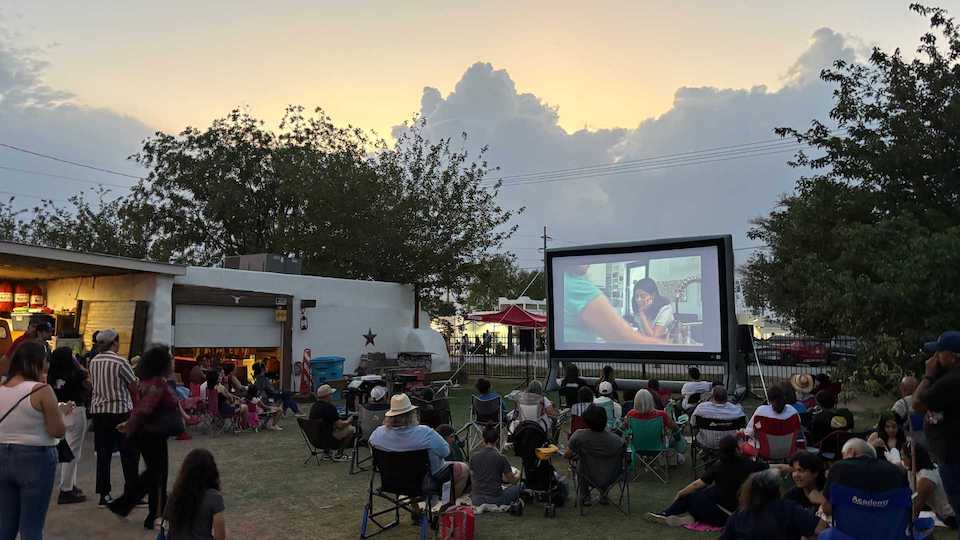

Race Forward and Working Films are thrilled to announce the 2024 Race Flicks film track of Facing Race: A National Conference, being held in person in St. Louis, Missouri, November 20-22. Race Flicks is a micro-film track during the conference that lifts up critical issues and stories of community organizing for racial justice. This year’s program maintains a focus on accountable and care-centered filmmaking that respects and reflects the people and places featured, and holds great potential to build power among those represented in the stories at hand. The selected films were chosen in large part because of the way they can be used strategically by advocates, organizers, and nonprofits to advance their work for racial justice.
Across the world, we are in a crucial time that calls for solidarity, community care, and action in the face of racial injustice, attacks on our democracy, divestment in public education, and inadequate and inaccessible healthcare (just to name a few). The films selected for this year’s Race Flicks track highlight urgent stories and solutions from communities most impacted by these issues and created by filmmakers who have prioritized community care in their filmmaking and social impact practices.
This year’s lne-up of films covers topics of Indigenous sovereignty and freedom of press, Black maternal health, Black women and girls’ mental health, reparations, and student-led organizing for adequate public education and support for students of color.
The full Race Flicks line up will feature the following films as well as post-screening panel discussions and Q&As with the filmmakers and issue experts.
2024 Race Flicks Films:
The Five Demands, Directed and Produced by Greta Schiller and Andrea Weiss, Run time: 58 minutes

The Five Demands is a riveting story about the student strike that changed the face of higher education. In April 1969, a small group of Black and Puerto Rican students shut down the City College of New York, an elite public university located right in the heart of Harlem. Through archival footage and modern-day interviews, we follow the students’ struggle against the institutional racism that, for over a century, had shut out people of color from this and other public universities. The Five Demands uncovers the untold story of this explosive student takeover and proves that a handful of ordinary citizens can band together to take action and affect meaningful change.
The Cost of Inheritance, Directed by Yoruba Richen, Produced by Lacey Shwartz and Mehret Mandefro, Run time: 55 minutes
 The Cost of Inheritance explores the complex issue of reparations in the United States and takes a personal approach to understanding our history, systemic injustices, and racial inequities. We follow descendants of enslavers and the enslaved as they are reckoning with their past and trying to find a just way forward. Opposing views and challenges to the concept of reparations are also heard in the exposition of our complicated history. The film introduces viewers to those who are working toward common ground, despite their differing perspectives. The protagonists launch conversations, attempt to reconcile, and take specific actions that aspire to close the racial wealth gap in America. The disparate trajectory of lives, families and communities impacted by structural racism unfolds through archival images of land, labor exploitation and racial violence, set against a backdrop that depicts the pursuit of justice for Japanese internment survivors and survivors of the Holocaust.
Bad Press, Directed by Rebecca Landsberry-Baker and Joe Peeler, Run time: 98 minutes (An excerpt from the film will be shown during the conference along with info about how to watch the full film)
 Imagine you lived in a world where your only reliable news source became government
propaganda overnight. That’s exactly what happened to the citizens of the Muscogee Nation, the fourth largest Native American tribe, in 2018. Out of 574 federally-recognized tribes, the
Muscogee Nation was one of only five to establish a free and independent press – until the tribe’s legislative branch abruptly repealed the landmark Free Press Act in advance of an election. The tribe’s hard-hitting news outlet, Mvskoke Media, would now be subject to direct editorial oversight by the tribal government. One defiant journalist refuses to accept this flagrant act of oppression. As brave as she is blunt, veracious muckraker Angel Ellis charges headfirst into battle against the corrupt faction of the Muscogee National Council. Angel and her allies rally for press freedoms by inciting a voter-supported constitutional amendment, just in time for the start of a new election cycle.
Birth from the Earth, Directed by Katy Walker Mejia; Produced by Katy Walker Mejia, Natasha Scully, and Betty Bastidas, Run time: 16 minutes
 Up against a broken for-profit medical system, home birth midwife and educator Nubia Earth Martin is a visionary leader in the Birth Justice movement working tirelessly to create more opportunities and empower BIPOC mothers and families to safely give birth at home and support the midwives and birth workers who guide them along their sacred journey. We hear so many negative stories and news coverage of how black mothers are dying, and that birth is dangerous and scary. The mothers and families who contributed to the film all had a desire to share a different perspective – one of our fore mothers and great-grandmothers who all successfully brought forth life in a beautiful way, so that we – their descendants, would be able to uplift these stories into the present day.
Smile4Kime, Directed by Elena Guzman, Produced by Cybee Bloss, Run time: 26 minutes
 Smile4Kime is an experimental documentary that explores the friendship between two women: Kime–a vibrant, unapologetic Black woman who lived with mental illness, and Elena–an Afro Puerto Rican woman and devoted friend coping with grief in the wake of Kime’s death. This story begins as a conversation between Kime and Elena unfolding across time and space. They ask each other about who they are, what they need, and what their future holds. As Kime’s mental health begins to spiral, the film urgently weaves together the past, present, and future in search of answers.