How can filmmakers enter movement spaces without getting in the way? How do you balance making the film you want to make with being accountable to the people and movements at the center of it?
In this conversation, Working Films’ Director of Campaigns and Strategy, Andy Myers, talks with filmmaker Yael Bridge about making Who Moves America. They talk about what it means to build trust with people whose lives and organizing are at the center of a film; how filmmakers can keep a small footprint in movement spaces; and why understanding how to do this work means, in part, recognizing how much you don’t know.
Andy: For folks who aren’t aware, can you tell us about Who Moves America? What was happening at UPS that made you want to follow this specific fight?
Yael: The film follows the 2023 contract negotiation with UPS Teamsters, which is the largest bargaining unit in North America. There are around 350,000 people who are all on this one contract. They all have the same boss, UPS, but they all live in different parts of the country and sometimes even have different jobs. Some of them are part-time, some are full-time, some load the truck, some drive the truck. And they’re all covered under this one contract.
Even though they’ve never met and probably will never meet, they have to align in order to get the contract they all want. Your goal has to become my goal, and I also have to fight for the goals that you want. It’s this messy, beautiful practice in democracy and compromise at a very large scale for a union, but it can also function as a microcosm for any type of politics or coalition building. A union is simply people working together to do the things they can only do when they do them together. And I think workers have a lot to teach us about what democracy can look like in practice.
Andy: Was that sense of solidarity, and what workers can accomplish together, part of why you made this film? Were you hoping the film would support workers?
Yael: Certainly. I actually had this talk with someone yesterday who’s a labor lawyer in Buffalo. She asked me why I make these types of films, and I realized something I hadn’t really talked about before.
I had the good luck to become friends with Jane McAlevey. She was a really important labor organizer in this country. She passed away a few years ago while we were making the film, so she has a special thanks in the end credits, but in my heart the film is dedicated to her.
I remember on our first phone call we were talking about unions and she said something about how I was a worker.
And I was like, “Oh no, Jane, I’m not a worker. I have an MFA in documentary film. I’m a filmmaker.”
And she said, “Do you work for a living?”
I said, “Yeah, I have to work for my rent.”
And she said, “Yeah, you’re a worker.”
I had just never thought of myself in that way. I thought of unions as jobs for people in hard hats. But that’s not the case anymore – most union jobs are actually in government and nearly 25% are in education or healthcare. I think most people still think of “workers” as people like nurses and teachers, or people working in coal mines. And that’s just not the state of labor anymore.
It was this seismic shift in the way that I thought about myself as someone navigating the political economy that we live in. I am a worker. Really, we are all workers. Anyone who works for a paycheck with their labor is a worker.
So I don’t even really have this distinction of, “Oh, this is to support workers.” No, this is for all of us. It’s for us to learn how to build solidarity with other people as much as it is for people at UPS, Teamsters, or other unions.
In the independent documentary film industry, we’re all workers. We don’t have health insurance, we don’t have a union, we certainly don’t have an HR department – we’re very disorganized. So in our own industry we have a lot to learn from the Teamsters in building solidarity so that we could hopefully one day have our own union where we could have things like parental leave, a pension, etc. It’s not pie in the sky at all – it just requires a mind shift and a lot of time but what could be more important?
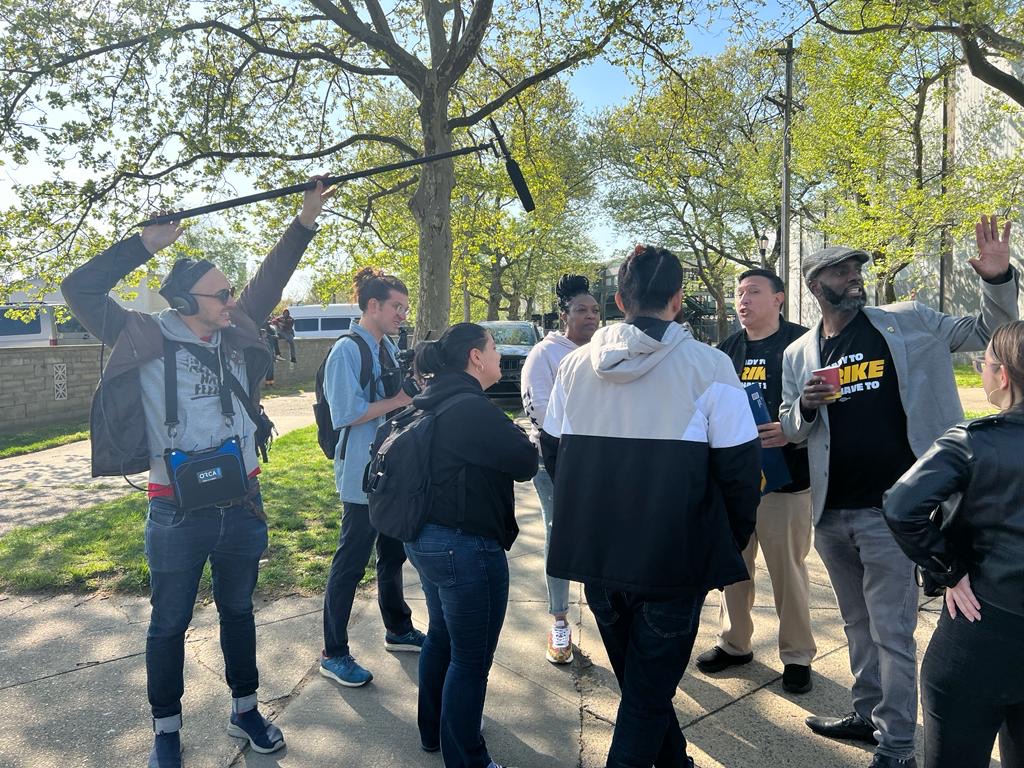
 Andy: That idea of solidarity also raises an important question about the relationship between filmmakers and the movements they’re documenting. What did you do during production to make sure you weren’t getting in the way of the organizing that was happening? I remember I once saw an image of a film team documenting a union meeting and the camera operator and boom operator were literally right in front of the people leading the meeting and blocked the entire group of workers from seeing them. The film team essentially got in the way of the organizing happening. It seemed like a real example of what-not-to-do. What were your practices like?
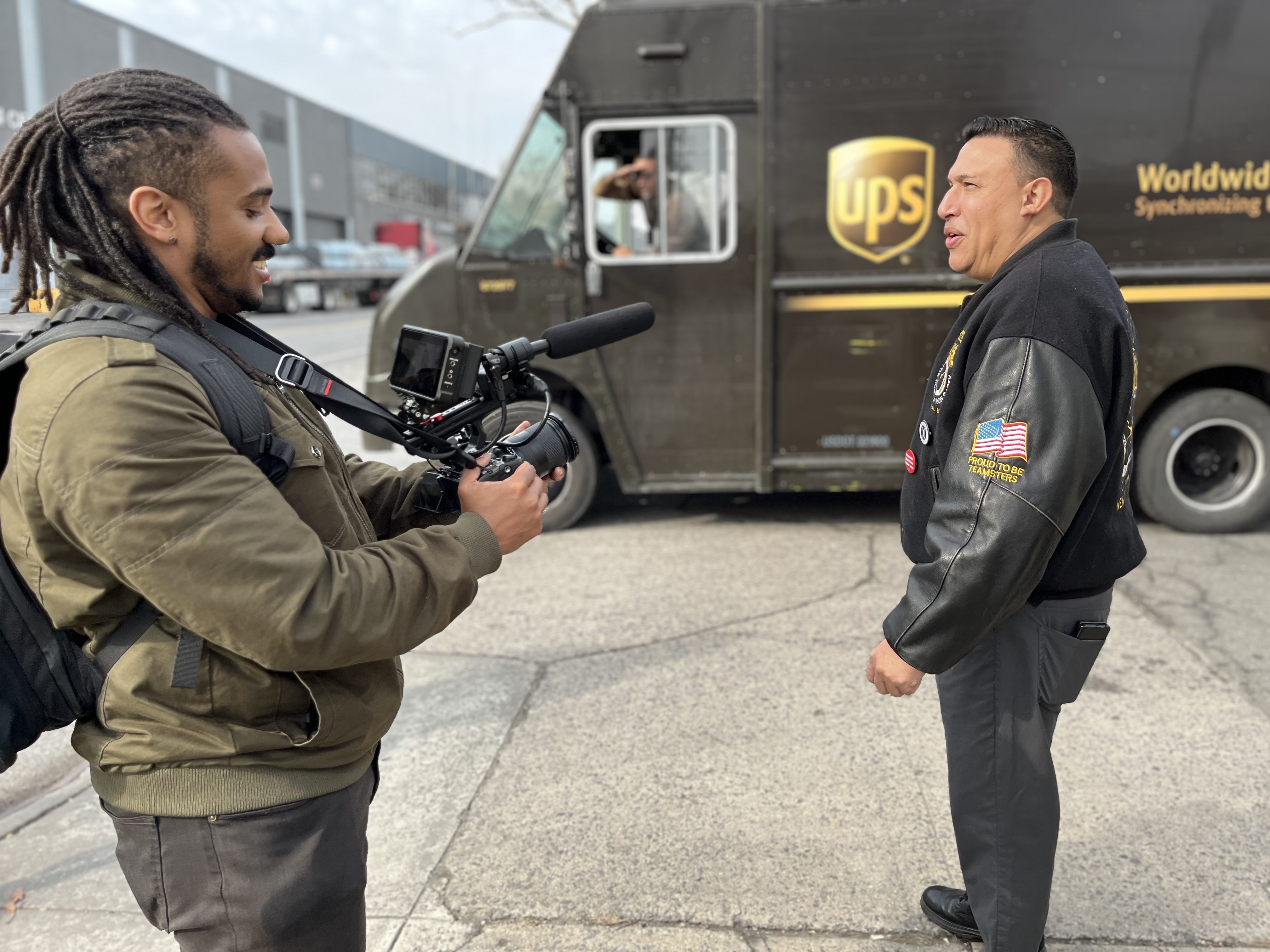
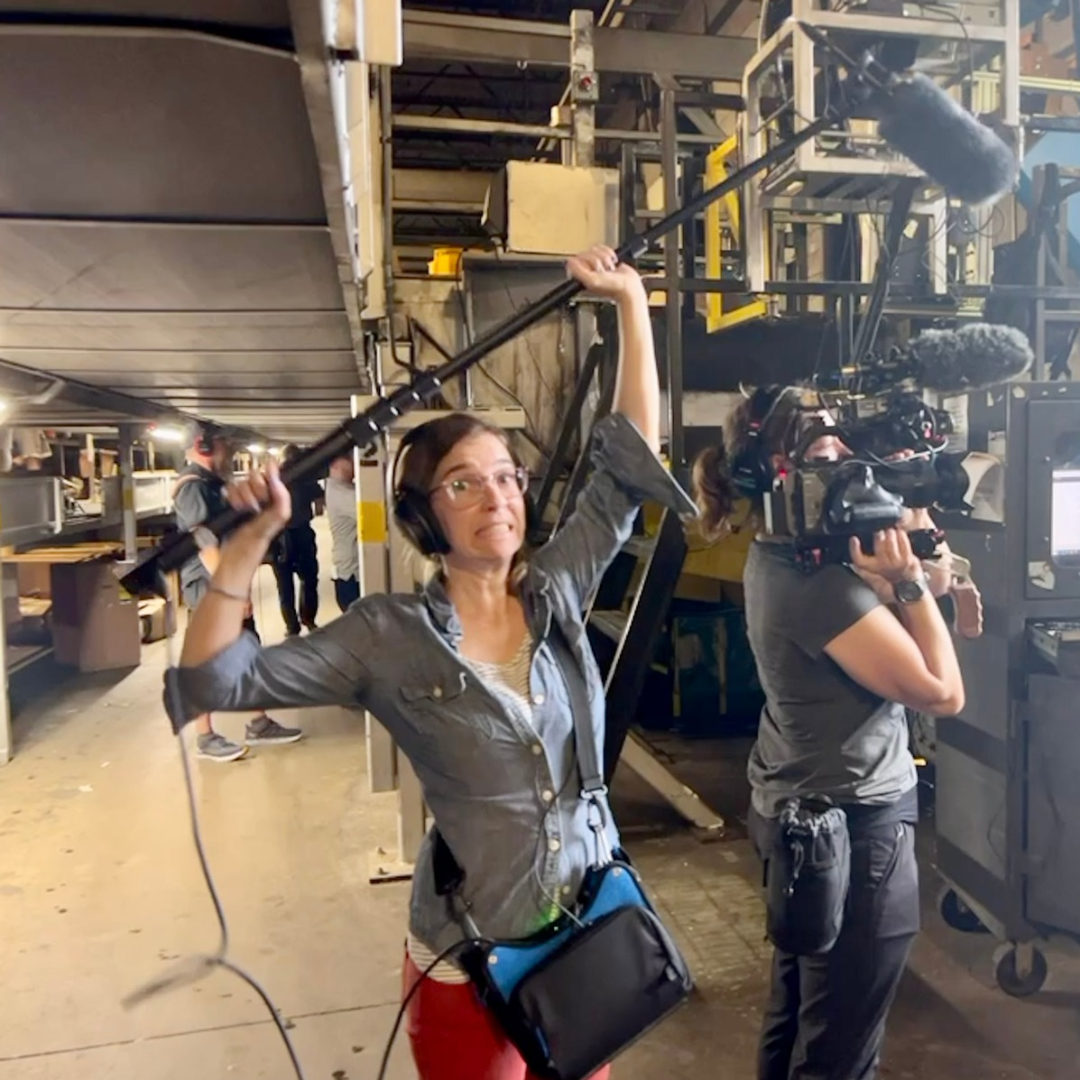
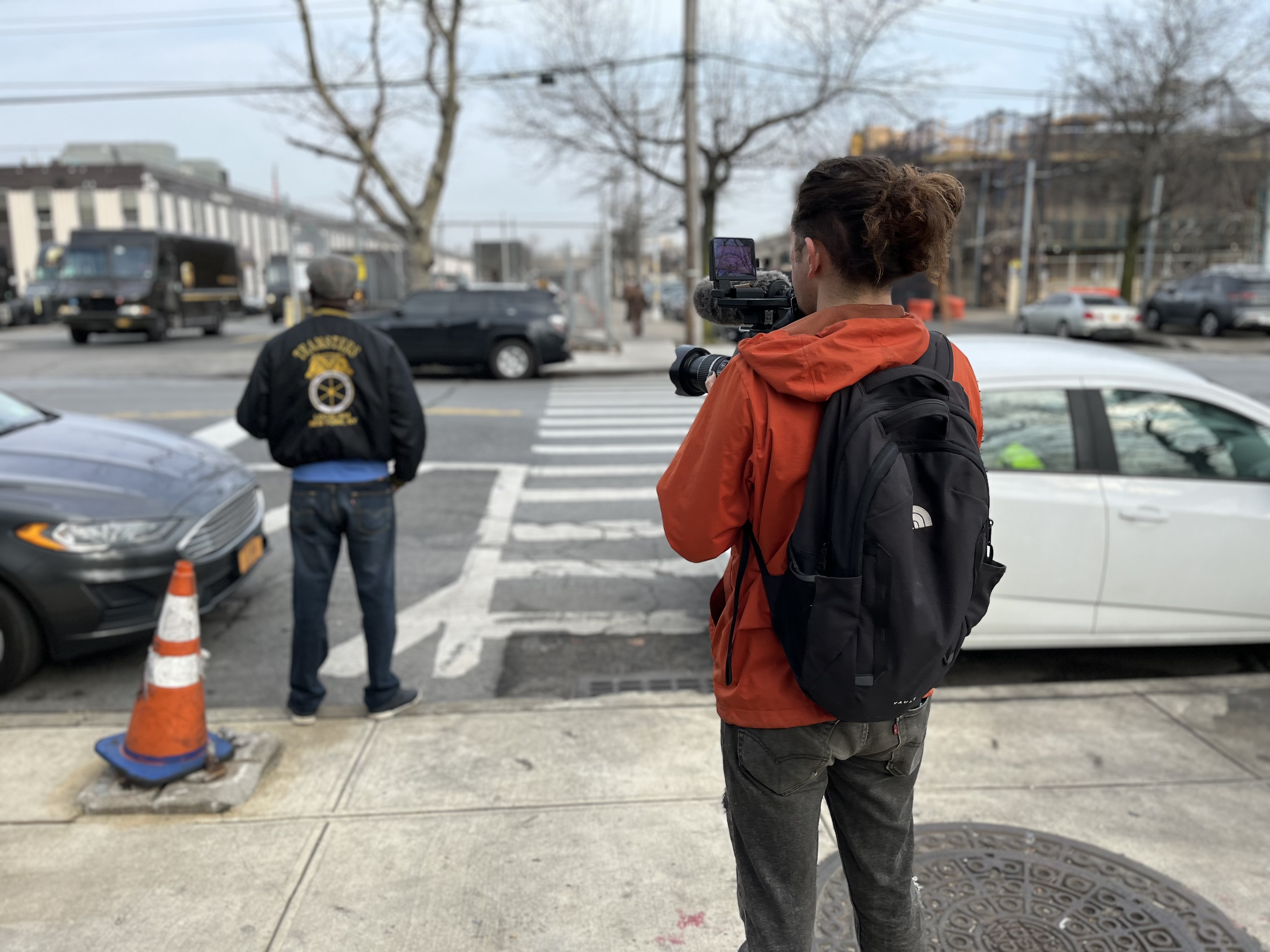
Yael: Yeah, I’ve seen that picture too! Everyone on my film team has experience being organizers so we are in these types of spaces all the time. They are familiar to us. So, we’re really trying to have a very, very small footprint. We would never allow our filming to get in the way of the work that the people we’re filming with are doing. Our shot can’t be more important than what we’re actually there to film.
We want to document something, but we don’t want to document it at the cost of what is actually happening in that room or in those conversations. We’re trying not to disrupt a thing.
So staying off to the side as much as we can, using wireless mics instead of a boom pole as much as possible. We also didn’t come with a full easy rig or big equipment footprint, we traveled light, used a cinesaddle or other handheld light gear. We would very rarely, depending on the situation, ask someone to repeat themselves or anything. We’re trying to keep a very small footprint.
And then we foster friendships with the people that we film with. We might be filming in the morning and then it’s like, okay, cool, now we’re filming, and now let’s put the camera down to go get lunch. To have that kind of friendship, it is a process of collaboration as well, and getting to know each other.
We were also clear with everyone who we are and what we’re doing – we are indie filmmakers here to film the organizing. We really believe in the importance of this organizing. If there’s anything at any point that needs to be off the record, we were clear they could tell us to leave the room or turn off the cameras, and then they can tell us when they are ready for us to turn them back on again. At the same time, we conveyed that the more they allowed us to film the more valuable this would be to future generations of workers and organizers, and the more accurate this documentation would be. We also let them know that it will take a long time to edit, so if they were discussing tactics and strategies for the following weeks, they didn’t have to worry about those tactics being revealed this week. We operate on a whole different time cycle than the news or social media.
Andy: Why are those practices so important? What do you think filmmakers need to understand about entering movement spaces that they might not see from the outside?
Yael: In movement work there are all these different lines, different caucuses, different political dynamics happening at any given moment.
There are power dynamics that you can’t read about on the news, in a history book or even a contemporary union manual. And you need to make sure that the people you’re filming can feel comfortable because they are having hard conversations with each other and there are lots of disagreements as you see in the film, but if things are taken out of context it could cause misunderstandings not only with their boss but also with other union members. So we needed to be committed to including that context and respect for everyone’s point of view and making that clear to the people we were filming with so they could be comfortable. And it was really amazing witnessing the conversations and many disagreements that people had about issues that seriously affect their day-to-day lives in a respectful way.
There are also elements around protecting their job safety and security. For example, at some point someone offered to let us film inside their truck while they were driving. We were never going to do that, even though it might have been great for the film, it’s something that could get them in trouble. Like if while we were filming someone said, “Hey, jump in the truck!” we’re like, “No, we’re not going to jump in the truck with you.” That would be a much better shot, but that doesn’t feel like something that UPS would be happy with you about.
So it’s finding that balance.
Andy: You’re doing a lot here with the needs of the movement in mind. What do you think filmmakers owe the movements that they cover?
Yael: I guess everything.
I think we owe everything to the people that we film with. I can’t think of what you wouldn’t [owe them]. They’re being generous with their time and their energy and their trust and their spaces. They were inviting us into really private conversations about their personal finances, their insecurities and their families’ needs and the sacrifices that they would be making for the movement.
I am appreciative and respectful, but that doesn’t mean I’ll do whatever they want or I’m somehow in their pocket. I simply mean that I’m doing everything I can to mitigate the inherently extractive process in this form of art. Maybe its something like being a scout – do no harm and leave the forest in better condition than when you found it.
Andy: And when you had a cut of the film, did you share that with the people you had filmed with?
Yael: When we finished our fine cut we showed the film to the people we filmed most closely with, the people who let us film with them at home, with their families. And we would watch with them. We’d make sure we were in the room with them and get any sort of notes or feelings or reactions that they had. We made clear throughout the process that we’re independent filmmakers so won’t recut anything just because they don’t like something. But we also made it clear that we don’t want to put anyone at risk.
Maybe something felt too personal or sensitive that they didn’t want to share anymore. Maybe something could get them in trouble with their work. We are incredibly sensitive to that.
Maybe something they said could have caused a lot of disruption within their union dynamics. If they’re talking a lot of shit about someone else that they are in coalition with, let us know if that line should come out of the film.
It doesn’t mean we’re going to take everything out, but we don’t know these dynamics. Maybe it’s not that important to us to hear you call a colleague a crackpot. That’s funny, but actually, that’s not important to the film, and it would be incredibly divisive and maybe fracture a coalition that you’ve already been building.
So what is the trade-off for us in the film and for you, in your work? What’s the value to the audience? We’re really trying to be supportive of that work.
Andy: You’ve talked about being intentional about how the film serves the people and movements you’re documenting. I’ve also heard you say you don’t necessarily see Who Moves America as an organizing tool or a piece of advocacy. How do you see that distinction? What would you tell a filmmaker who says, “I don’t want to make a PSA. I want to make a true, authentic human story, but I also want to support the work that’s happening”?
Yael: That’s so personal, I think, and everyone has their own barometer for that. Mine changes a few times a day.
I think all art is propaganda. I think to pretend otherwise is delusional. No one makes something that they are neutral on.
Particularly in the documentary space, and especially in the funding of the documentary space, there’s this ruse that you have to play that says, “Oh, I’m neutral on this.”
I don’t want to speak for my team but I personally did not make the film to be an organizing tool for Teamsters. It’s not a PSA for them. But it is very much to represent and show a story of individuals that we don’t often get to see, with the goal of inspiring and moving other people to understand that unions are a tool for collective organizing and for improving our lives.
Really, I think collective organizing is the only tool that’s going to get us anywhere. It is when we can all band together that we have power. I’m not neutral on that at all.
Andy: And now that the film is out in the world, how are you thinking about distribution in relation to the movement?
Yael: We’re combining our theatrical run with our impact run. As much as we can we’re doing Q&As after the screenings that are specifically about organizing issues, and not about the filmmaking process.
In each of the cities that we’re screening in, we’re reaching out to local organizers to find out the organizing issues that are happening there. And then we use the film screenings to elevate those issues and have a conversation around them.
In Seattle, for example, we’re working with the Starbucks union there, and we’re going to have a Q&A about how the film and what the Teamsters went through is relevant to their organizing work.
When we had a screening in New York, we had a Q&A with Democracy Now host, Amy Goodman, and Councilmember Tiffany Cabán, to talk about the Delivery Protection Act, and educate people around that legislation.
That’s really cool and a huge privilege. The best part of this process for me is being able to connect in each of the different cities to know what’s going on. So we’re not just with the Teamsters, not just with the people that we filmed with, but whatever the organizing issues might be in those regions.
Andy: Last question. What advice would you give filmmakers who want to use their work to support movements and organizing?
Yael: They need to ask themselves: What are you trying to make? Who is it for? And what do you want those viewers to do with whatever they’re thinking and feeling when your film is done?
And constantly revisit those questions throughout the filmmaking process because your answers will likely change.
That will lead you towards different paths within the filmmaking process all the way through to your distribution, whether that is going to a bunch of the movement work without your camera and just as a participant, so that you understand what those power dynamics are like; or figuring out what else you need to do.
And then always be really respectful and check in with the people that you’re filming with about what would feel good to them.
I think we make a lot of assumptions about what support looks like or what being respectful looks like, and we don’t know.
I remember when I was doing a Kickstarter campaign about ten years ago, when Kickstarter was unionizing. A lot of people were saying, “We’re supposed to be boycotting Kickstarter, so don’t donate right now.”
That was not what Kickstarter union organizers were saying at all. They were not calling for people to boycott. In fact, that would have been very unhelpful to their organizing efforts.
It was a real lesson for me. It was just like, right, always ask. “What would support look like to you? Do you want people to be boycotting your product or services right now, or is that not what support would look like?”
We make these films because we’re curious about something. If I knew the answer I wouldn’t make the film. But it’s important to maintain, and really nurture that curiosity the entire time. And not only while making, but afterwards as well.