
In a landscape of cascading societal crises, a swift response to pressing issues is essential. This is where film screenings become invaluable – not only do they inform but they also inspire action in the face of emerging social and…
LATEST NEWS
In the News

Working Films News
Meet this Year’s Rural Cinema Cohort!
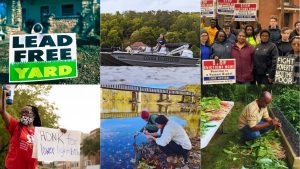
In a world facing urgent environmental threats, the need for action is clear. Amidst these pressing challenges, we need organizations that embody resilience and determination, actively addressing environmental injustices within their communities. Working Films is proud to present the Rural…
In a world facing urgent environmental threats, the need for action is clear. Amidst these pressing challenges, we need organizations that embody resilience and determination, actively addressing environmental injustices within their communities. Working Films is proud to present the Rural Cinema 2024 cohort, comprised of organizations doing just that: Alabama Rivers Alliance and Coosa Riverkeeper (Alabama), Local Environmental Action Demanded (Oklahoma), NC Disaster Resilience and Response Network (North Carolina), Peace Garden Project (North Carolina), SOWEGA Rising (Georgia), and West Virginia Rivers Coalition (West Virginia).
Rural Cinema is a training institute and community engagement program that supports community leaders in rural areas and small towns across the United States in using documentary films to advance their local efforts and mobilize people to action on critical issues facing their area. This year’s cohort will participate in Rural Cinema’s virtual training institute covering Working Films’ Eight Elements of Putting Films to Work, a curriculum focused on best practices for using documentary film for change and environmental justice. At the end of the training and through individualized consultation with the Working Films team, each community changemaker will organize multiple screening events over the course of the year. Each organization in the cohort will receive $7,500 in monetary support and EPIC Outdoor Cinema solar-powered film screening equipment, including a projector, screens, speakers, and solar battery.
Meet the year’s 2024 Rural Cinema cohort:
Alabama Rivers Alliance + Coosa Riverkeeper

 The Alabama Rivers Alliance (ARA) is a statewide coalition of diverse organizations dedicated to safeguarding and rejuvenating all of Alabama’s waterways. Through collaboration, community empowerment, and advocacy for effective water policies, ARA aims to protect the state’s water resources. Their strategic plan prioritizes influencing environmental policies, partnering with communities and allies to strengthen collective advocacy, and ensuring the safety, equity, resilience, and ecological health of Alabama’s water infrastructure. ARA is seeking a grant in partnership with Coosa Riverkeeper, whose mission is to preserve, advocate for, and restore the Coosa River and its surroundings, particularly in rural areas where much of the watershed flows through.
 Kelly Marshalls joined the Alabama Rivers Alliance in 2015, bringing significant experience and success in public relations, marketing and event planning. As ARA’s Deputy Director, she manages the external and internal communication strategies, plans events great and small, and manages the Southern Exposure Documentary Film Series program.
She has championed and celebrated Alabama’s wealth of talent, cultural history, and natural beauty for more years than she cares to admit. Before joining ARA, she managed the communications strategies for Birmingham Artwalk, Sidewalk Moving Picture Festival (now Sidewalk Film Festival), Birmingham Arts & Music Festival and other events in Alabama. In addition to her non-profit and event experience, Kelly also developed comms strategies for a variety of companies including Barenbrug Seed Company, Simply Fashion, Village Tavern, and many more.
 As Director of Community Engagement, Abby Brown ensures the people of the Coosa River watershed are engaged in Coosa Riverkeeper programs and are informed and educated about the threats to the Coosa and public health. She manages all education and outreach initiatives to increase organizational reach through collecting accurate information on the health of our waters, engaging the public to be good stewards of our water resources, and ensuring ample operating funds are generated for the organization.
Abby joined Coosa Riverkeeper in 2020 as Development Coordinator through AmeriCorps VISTA, working to improve communications, donor retention, and increasing capacity through various funding sources. After one year of AmeriCorps service, Abby became a full-time employee of Coosa Riverkeeper as Outreach Manager, leading all outreach efforts for Coosa Riverkeeper programs while supporting fundraising efforts including donor engagement, communications, and events. Abby graduated cum laude from Birmingham-Southern College in 2020 with a B.S. in both Biology and Urban Environmental Science.
🌐 alabamarivers.org and coosariver.org/
Local Environmental Action Demanded
 L.E.A.D. (Local Environmental Action Demanded) is a grassroots environmental justice organization led by Indigenous people. They focus on safeguarding the health and well-being of residents in Ottawa County and neighboring areas in northeastern Oklahoma, which comprises the territories of various Indigenous nations. The region faces numerous environmental challenges including the Tar Creek Superfund Site, benzene contamination from a former tire plant, poultry waste, and flooding from dam-related issues. L.E.A.D. aims to amplify the voices of those affected by environmental pollution and seek justice for them. Their initiatives include toxic tours, educational programs, surveys, conferences, community events, advocacy campaigns, and support for emerging environmental justice groups. They employ outreach, education, advocacy, and legal action to advocate for community-driven solutions and environmental justice.
 Loren Waters (Cherokee Nation and Kiowa Tribe) centers her work on environmental knowledge, culture revitalization, and Indigenous futurity through storytelling. In addition to being an award-winning filmmaker, she assists with grant making and community organizing in partnership with the L.E.A.D. Agency.
 Moriah Bailey Stephenson is the Education and engagement Coordinator for Local Environmental Action Demanded (LEAD Agency). She is driven by a commitment to realizing more equitable environmental futures for all living beings and has been actively involved in fighting the harms of resource extraction for ten years. Alongside her environmental justice work, she has training in music education and loves working with young people to explore environmental activism and connections to places through music, the arts, oral history, outdoor exploration, and storytelling.
🌐 www.leadagency.org/
NC Disaster Resilience and Response Network
 The NC Disaster Resilience and Response Network coordinates rural-focused and grassroots initiatives to aid disaster recovery groups statewide. It’s a diverse coalition of local, regional, and statewide organizations working together to address environmental injustices and legacy pollution in affected communities. Through partnerships and direct community engagement, the network advocates for systemic changes to ensure equitable response, recovery, and resilience for all North Carolinians. They serve as a hub for public health information, connecting vulnerable individuals with resources and fostering collective action towards a fairer and more sustainable society.
 Jessica Hulick (she/her) is a Queer Mom of two incredible children and community and political organizer. Beginning in 1995, she has worked on countless campaigns and community initiatives, focused mainly on LGBTQ issues, anti-racism work, reproductive health, gun violence prevention, education, and mental health advocacy. Jessica is a first-generation college graduate, holding a Master’s Degree in Applied Sociology from UNCG and an undergraduate degree from UNCW. She also earned a certificate in Nonprofit Management from Duke University in 2017. She loves camping, hiking, being near any body of water, raising chickens and goats, gardening, crafting, and thrifting.
 Since 2020, Anita Cunningham has served as the Director of the NC Disaster Survival and Resiliency School, spearheading efforts to bolster disaster organizing in communities affected by disasters and climate change statewide. Additionally, she actively supports initiatives at the intersection of energy and environmental justice. In Robeson County, she’s deeply involved in environmental justice efforts, collaborating with community and county leaders to combat issues like the wood pellet industry and legacy pollution. Anita’s advocacy extends to her membership in various coalitions such as the Southern Forest Conservation Coalition, Eastern NC Cleaner and Greener Coalition, and the Impacted Communities Against Wood Pellets Coalition, where she advocates for people’s power, forest conservation, and environmental justice. Her passion for justice in the South drives her to empower BIPOC communities locally for systemic change while advocating for cleaner and greener energy sources. Her dedication stems from her love for the planet and her desire to ensure a better future for her family, including her two children and three grandchildren, motivating her to stand in solidarity with like-minded partners across the region.
🌐 www.ncsurvivalschool.org/
SOWEGA Rising
 SOWEGA Rising aims to enhance the quality of life, well-being, and political influence of marginalized residents in Southwest Georgia. Their initiatives include focusing on climate, utilities, and environmental (CUE) justice. They educate the community about the impact of CUE justice on their daily lives, particularly regarding high utility costs that pose significant economic challenges, especially for those already living in or below poverty levels. Through organizing training and advocacy efforts, they empower individuals to address these issues with local leaders and develop solutions and policies. SOWEGA Rising also collaboratively produced a Utilities Justice report and established a Utilities Justice Fellowship to educate, inspire, and empower citizens to enact positive change within their community.
 Sherrell Byrd is the co-founder and executive director of SOWEGA Rising, a nonprofit, nonpartisan advocacy organization focused on issues at the center of racism and poverty southwest Georgia. SOWEGA Rising’s mission is to mobilize people and resources to improve the well-being, quality of life and political power of marginalized Southwest Georgians. Sherrell leads a team of organizers who tackle crisis level issues that disproportionately impact rural communities and communities of color including but not limited to: climate, utilities and environmental justice; housing justice, historical and cultural preservation, environmental racism and economic injustice. SOWEGA Rising partnered with 9 to 5 Georgia in 2022 to produce a Utilities Justice Report and again in 2023 to produce the mini-documentary Life Uninhabitable: Deconstructing the Housing Crisis in Rural Georgia.
 Corey B. Morgan is the Climate and Energy Justice Manager at 9to5 National Association for Working Women, Georgia Chapter. Centering his work in the Southwest Georgia region, he has been organizing in grassroots capacities since 2017, often finding himself advocating on issues of voting rights and racial and economic justice. He seeks to achieve a goal of building a statewide environmental justice ecosystem that helps push public policies that are rooted in equity and justice for all people free from any form of discrimination and bias. Corey B. Morgan is also a member of the Camilla City Council and a board member for SOWEGA Rising.
🌐 sowegarising.org
Peace Garden Project
 The Peace Garden Project aims to tackle issues of justice by focusing on environmental and food justice. Through education and community involvement, they empower individuals to understand the interconnectedness of environmental issues with broader social problems and encourage collective action for change. They promote growing food as a means to address both individual and communal health and economic empowerment. They recently initiated the Outer Banks Environmental Film Festival to further their environmental education and community engagement efforts, reaching audiences not only in Eastern North Carolina but also across the United States and 23 other countries. While their work spans locations like New York and North Carolina, their current focus is on Manteo, North Carolina. Led by Black, Indigenous, and Latinx individuals, their organization’s leadership and volunteers represent diverse backgrounds, including immigrants, first-generation Americans, and people from various socio-economic statuses. They prioritize accountability through ongoing conversations and surveys with the communities they serve.
 Michelle Lewis, who descends from African and Indigenous peoples, is a native of the Outer Banks of North Carolina. She is the founder and Executive Director of the Peace Garden Project. In 2023, Michelle organized the inaugural Outer Banks Environmental Film Festival. Her love of the environment started early; she has even worked as a United States Park Ranger. Michelle believes that people working together can change the world and is committed to creating and maintaining spaces for all people to be engaged in environmental work. She has presented at national conferences and has served on local, national, and international boards of directors for NGOs. Michelle holds a joint master’s degree in Religion and the Environment from Yale School of the Environment and Yale Divinity School, and she completed her doctoral work at Candler School of Theology at Emory University.
 Josie Walker is a native of Eastern North Carolina and is the co-founder of the Black Seed Saving Collective. She is a certified garden educator and horticulturalist who believes in food sovereignty, self-sufficiency, and the power of plants to solve myriad problems. She has presented at national conferences and co-created a series of garden instructional videos. She holds a Bachelor of Science in Urban and Community Horticulture from North Carolina Agricultural and Technical State University as well as a Bachelor of Science in Mathematics from the University of North Carolina at Charlotte. In addition to being a member of the Outer Banks Environmental Film Festival Steering Committee, Josie serves on the board of directors for the North Carolina Botanical Garden Foundation.
🌐 www.peacegardenproject.net
West Virginia Rivers Coalition
 The West Virginia Rivers Coalition is committed to preserving and restoring West Virginia’s rivers and streams for diverse ecosystems and economies. They engage in policy advocacy, industrial oversight, safe water initiatives, public lands protection, climate action, just transition, and watershed advocacy to advance environmental justice. They advocate for water quality policies, monitor industrial impacts, safeguard drinking water, preserve public lands, educate on climate change, support fair transitions, and improve regional watersheds.
 Maria Russo, raised on a Shenandoah Junction farm, holds a Bachelor’s Degrees in Public Policy and Latin American Studies from Brown University. Her career spans restorative drug policy, criminal justice campaigns, and lobbying for environmental legislation in West Virginia. As Clean Water Campaign Coordinator at WV Rivers, Maria merges policy advocacy with community engagement for a sustainable future. In her downtime, Maria is often walking barefoot through the woods, listening to live music, or floating down the river with friends.
 Maggie Russo grew up in Northeastern Pennsylvania, but she got to West Virginia as soon as she could. With a deep commitment to working for people and our collective future, Maggie brings over a decade of organizing, communications, and fundraising expertise to WV Rivers. Maggie manages communications and advocacy, amplifying the impact of WV Rivers’ projects. In her free time, you can find her exploring all the exceptional streams, creeks, rivers, and lakes West Virginia has to offer with her rescue Corgi, Ozzy.
🌐 www.wvrivers.org
For regular updates on the Rural Cinema 2024 cohort, follow Working Films on Twitter and Instagram.
Applications for Rural Cinema 2025 will open in late Winter 2024.
Rural Cinema is made possible with generous support from the Kendeda Fund, Perspective, Putnam Foundation, and the Z. Smith Reynolds Foundation.
The Alabama Rivers Alliance (ARA) is a statewide coalition of diverse organizations dedicated to safeguarding and rejuvenating all of Alabama’s waterways. Through collaboration, community empowerment, and advocacy for effective water policies, ARA aims to protect the state’s water resources. Their strategic plan prioritizes influencing environmental policies, partnering with communities and allies to strengthen collective advocacy, and ensuring the safety, equity, resilience, and ecological health of Alabama’s water infrastructure. ARA is seeking a grant in partnership with Coosa Riverkeeper, whose mission is to preserve, advocate for, and restore the Coosa River and its surroundings, particularly in rural areas where much of the watershed flows through.
Kelly Marshalls joined the Alabama Rivers Alliance in 2015, bringing significant experience and success in public relations, marketing and event planning. As ARA’s Deputy Director, she manages the external and internal communication strategies, plans events great and small, and manages the Southern Exposure Documentary Film Series program.
She has championed and celebrated Alabama’s wealth of talent, cultural history, and natural beauty for more years than she cares to admit. Before joining ARA, she managed the communications strategies for Birmingham Artwalk, Sidewalk Moving Picture Festival (now Sidewalk Film Festival), Birmingham Arts & Music Festival and other events in Alabama. In addition to her non-profit and event experience, Kelly also developed comms strategies for a variety of companies including Barenbrug Seed Company, Simply Fashion, Village Tavern, and many more.
As Director of Community Engagement, Abby Brown ensures the people of the Coosa River watershed are engaged in Coosa Riverkeeper programs and are informed and educated about the threats to the Coosa and public health. She manages all education and outreach initiatives to increase organizational reach through collecting accurate information on the health of our waters, engaging the public to be good stewards of our water resources, and ensuring ample operating funds are generated for the organization.
Abby joined Coosa Riverkeeper in 2020 as Development Coordinator through AmeriCorps VISTA, working to improve communications, donor retention, and increasing capacity through various funding sources. After one year of AmeriCorps service, Abby became a full-time employee of Coosa Riverkeeper as Outreach Manager, leading all outreach efforts for Coosa Riverkeeper programs while supporting fundraising efforts including donor engagement, communications, and events. Abby graduated cum laude from Birmingham-Southern College in 2020 with a B.S. in both Biology and Urban Environmental Science.
🌐 alabamarivers.org and coosariver.org/
Local Environmental Action Demanded
L.E.A.D. (Local Environmental Action Demanded) is a grassroots environmental justice organization led by Indigenous people. They focus on safeguarding the health and well-being of residents in Ottawa County and neighboring areas in northeastern Oklahoma, which comprises the territories of various Indigenous nations. The region faces numerous environmental challenges including the Tar Creek Superfund Site, benzene contamination from a former tire plant, poultry waste, and flooding from dam-related issues. L.E.A.D. aims to amplify the voices of those affected by environmental pollution and seek justice for them. Their initiatives include toxic tours, educational programs, surveys, conferences, community events, advocacy campaigns, and support for emerging environmental justice groups. They employ outreach, education, advocacy, and legal action to advocate for community-driven solutions and environmental justice.
Loren Waters (Cherokee Nation and Kiowa Tribe) centers her work on environmental knowledge, culture revitalization, and Indigenous futurity through storytelling. In addition to being an award-winning filmmaker, she assists with grant making and community organizing in partnership with the L.E.A.D. Agency.
Moriah Bailey Stephenson is the Education and engagement Coordinator for Local Environmental Action Demanded (LEAD Agency). She is driven by a commitment to realizing more equitable environmental futures for all living beings and has been actively involved in fighting the harms of resource extraction for ten years. Alongside her environmental justice work, she has training in music education and loves working with young people to explore environmental activism and connections to places through music, the arts, oral history, outdoor exploration, and storytelling.
🌐 www.leadagency.org/
NC Disaster Resilience and Response Network
The NC Disaster Resilience and Response Network coordinates rural-focused and grassroots initiatives to aid disaster recovery groups statewide. It’s a diverse coalition of local, regional, and statewide organizations working together to address environmental injustices and legacy pollution in affected communities. Through partnerships and direct community engagement, the network advocates for systemic changes to ensure equitable response, recovery, and resilience for all North Carolinians. They serve as a hub for public health information, connecting vulnerable individuals with resources and fostering collective action towards a fairer and more sustainable society.
Jessica Hulick (she/her) is a Queer Mom of two incredible children and community and political organizer. Beginning in 1995, she has worked on countless campaigns and community initiatives, focused mainly on LGBTQ issues, anti-racism work, reproductive health, gun violence prevention, education, and mental health advocacy. Jessica is a first-generation college graduate, holding a Master’s Degree in Applied Sociology from UNCG and an undergraduate degree from UNCW. She also earned a certificate in Nonprofit Management from Duke University in 2017. She loves camping, hiking, being near any body of water, raising chickens and goats, gardening, crafting, and thrifting.
Since 2020, Anita Cunningham has served as the Director of the NC Disaster Survival and Resiliency School, spearheading efforts to bolster disaster organizing in communities affected by disasters and climate change statewide. Additionally, she actively supports initiatives at the intersection of energy and environmental justice. In Robeson County, she’s deeply involved in environmental justice efforts, collaborating with community and county leaders to combat issues like the wood pellet industry and legacy pollution. Anita’s advocacy extends to her membership in various coalitions such as the Southern Forest Conservation Coalition, Eastern NC Cleaner and Greener Coalition, and the Impacted Communities Against Wood Pellets Coalition, where she advocates for people’s power, forest conservation, and environmental justice. Her passion for justice in the South drives her to empower BIPOC communities locally for systemic change while advocating for cleaner and greener energy sources. Her dedication stems from her love for the planet and her desire to ensure a better future for her family, including her two children and three grandchildren, motivating her to stand in solidarity with like-minded partners across the region.
🌐 www.ncsurvivalschool.org/
SOWEGA Rising
SOWEGA Rising aims to enhance the quality of life, well-being, and political influence of marginalized residents in Southwest Georgia. Their initiatives include focusing on climate, utilities, and environmental (CUE) justice. They educate the community about the impact of CUE justice on their daily lives, particularly regarding high utility costs that pose significant economic challenges, especially for those already living in or below poverty levels. Through organizing training and advocacy efforts, they empower individuals to address these issues with local leaders and develop solutions and policies. SOWEGA Rising also collaboratively produced a Utilities Justice report and established a Utilities Justice Fellowship to educate, inspire, and empower citizens to enact positive change within their community.
Sherrell Byrd is the co-founder and executive director of SOWEGA Rising, a nonprofit, nonpartisan advocacy organization focused on issues at the center of racism and poverty southwest Georgia. SOWEGA Rising’s mission is to mobilize people and resources to improve the well-being, quality of life and political power of marginalized Southwest Georgians. Sherrell leads a team of organizers who tackle crisis level issues that disproportionately impact rural communities and communities of color including but not limited to: climate, utilities and environmental justice; housing justice, historical and cultural preservation, environmental racism and economic injustice. SOWEGA Rising partnered with 9 to 5 Georgia in 2022 to produce a Utilities Justice Report and again in 2023 to produce the mini-documentary Life Uninhabitable: Deconstructing the Housing Crisis in Rural Georgia.
Corey B. Morgan is the Climate and Energy Justice Manager at 9to5 National Association for Working Women, Georgia Chapter. Centering his work in the Southwest Georgia region, he has been organizing in grassroots capacities since 2017, often finding himself advocating on issues of voting rights and racial and economic justice. He seeks to achieve a goal of building a statewide environmental justice ecosystem that helps push public policies that are rooted in equity and justice for all people free from any form of discrimination and bias. Corey B. Morgan is also a member of the Camilla City Council and a board member for SOWEGA Rising.
🌐 sowegarising.org
Peace Garden Project
The Peace Garden Project aims to tackle issues of justice by focusing on environmental and food justice. Through education and community involvement, they empower individuals to understand the interconnectedness of environmental issues with broader social problems and encourage collective action for change. They promote growing food as a means to address both individual and communal health and economic empowerment. They recently initiated the Outer Banks Environmental Film Festival to further their environmental education and community engagement efforts, reaching audiences not only in Eastern North Carolina but also across the United States and 23 other countries. While their work spans locations like New York and North Carolina, their current focus is on Manteo, North Carolina. Led by Black, Indigenous, and Latinx individuals, their organization’s leadership and volunteers represent diverse backgrounds, including immigrants, first-generation Americans, and people from various socio-economic statuses. They prioritize accountability through ongoing conversations and surveys with the communities they serve.
Michelle Lewis, who descends from African and Indigenous peoples, is a native of the Outer Banks of North Carolina. She is the founder and Executive Director of the Peace Garden Project. In 2023, Michelle organized the inaugural Outer Banks Environmental Film Festival. Her love of the environment started early; she has even worked as a United States Park Ranger. Michelle believes that people working together can change the world and is committed to creating and maintaining spaces for all people to be engaged in environmental work. She has presented at national conferences and has served on local, national, and international boards of directors for NGOs. Michelle holds a joint master’s degree in Religion and the Environment from Yale School of the Environment and Yale Divinity School, and she completed her doctoral work at Candler School of Theology at Emory University.
Josie Walker is a native of Eastern North Carolina and is the co-founder of the Black Seed Saving Collective. She is a certified garden educator and horticulturalist who believes in food sovereignty, self-sufficiency, and the power of plants to solve myriad problems. She has presented at national conferences and co-created a series of garden instructional videos. She holds a Bachelor of Science in Urban and Community Horticulture from North Carolina Agricultural and Technical State University as well as a Bachelor of Science in Mathematics from the University of North Carolina at Charlotte. In addition to being a member of the Outer Banks Environmental Film Festival Steering Committee, Josie serves on the board of directors for the North Carolina Botanical Garden Foundation.
🌐 www.peacegardenproject.net
West Virginia Rivers Coalition
The West Virginia Rivers Coalition is committed to preserving and restoring West Virginia’s rivers and streams for diverse ecosystems and economies. They engage in policy advocacy, industrial oversight, safe water initiatives, public lands protection, climate action, just transition, and watershed advocacy to advance environmental justice. They advocate for water quality policies, monitor industrial impacts, safeguard drinking water, preserve public lands, educate on climate change, support fair transitions, and improve regional watersheds.
Maria Russo, raised on a Shenandoah Junction farm, holds a Bachelor’s Degrees in Public Policy and Latin American Studies from Brown University. Her career spans restorative drug policy, criminal justice campaigns, and lobbying for environmental legislation in West Virginia. As Clean Water Campaign Coordinator at WV Rivers, Maria merges policy advocacy with community engagement for a sustainable future. In her downtime, Maria is often walking barefoot through the woods, listening to live music, or floating down the river with friends.
Maggie Russo grew up in Northeastern Pennsylvania, but she got to West Virginia as soon as she could. With a deep commitment to working for people and our collective future, Maggie brings over a decade of organizing, communications, and fundraising expertise to WV Rivers. Maggie manages communications and advocacy, amplifying the impact of WV Rivers’ projects. In her free time, you can find her exploring all the exceptional streams, creeks, rivers, and lakes West Virginia has to offer with her rescue Corgi, Ozzy.
🌐 www.wvrivers.org
For regular updates on the Rural Cinema 2024 cohort, follow Working Films on Twitter and Instagram.
Applications for Rural Cinema 2025 will open in late Winter 2024.
Rural Cinema is made possible with generous support from the Kendeda Fund, Perspective, Putnam Foundation, and the Z. Smith Reynolds Foundation.
In the News
Working Films News
ANNOUNCING THE 2024 IMPACT KICKSTART AWARDEES
Now in its sixth year, Working Films’ Impact Kickstart program has resourced underrepresented filmmakers to pursue strategic plans for impact and engage audiences, partners, and supporters in meaningful ways. This year, we will be providing in-kind partnership and strategy development,…
Now in its sixth year, Working Films’ Impact Kickstart program has resourced underrepresented filmmakers to pursue strategic plans for impact and engage audiences, partners, and supporters in meaningful ways. This year, we will be providing in-kind partnership and strategy development, expert 1:1 mentorship, and $60,000 of impact campaign funding to each awardee.
In reflection on the growth and evolution of Impact Kickstart, Gerry Leonard, Director of Filmmaker Services, says, “Each year, we have been able to reflect on and refine Impact Kickstart - from the initial call for applications to offering feedback and insights that came up during the review process to every filmmaker who applied. This year, an external selection panel held final decision-making for the Impact Kickstart award. We believe that Matininó and unseen are powerful examples of our work to reimagine and redefine the ways we can create collective and long-term impact that leverages the catalytic power of documentary film and storytelling."
We are thrilled to announce the two films receiving an Impact Kickstart in 2024!
MATININÓ by Gabriela Díaz Arp (Director), Karla Claudio Betancourt (Producer), Wendy Muñiz (Producer), Guillermo Zouain ( Producer), and Laura Garcia Reyne (Editor)
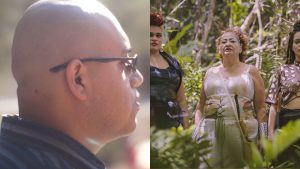
 Matininó is a hybrid documentary about a multi-generational family of Puerto Rican women transforming their experience with violence into a science-fiction film. Our story begins with the decision of ldaliz Villanueva to flee from a violent marriage when her two daughters—María and Desirée—were 6 months and 7 years old. Thirty years later, the effects of this violence continue to reverberate both in their family and more broadly in their home of Puerto Rico. As a way to find meaning within their family narrative, the women of the Villanueva family come together to write and star in a science fiction film where women hold the power. Their film opens in the year 2080 in an alternative world created by the eight Villanueva women. Our protagonist is 67 year-old Hotu, as imagined and portrayed by ldaliz. Together with her daughters and granddaughters they struggle to escape a world self-destructing from violence and run towards Matininó, an elusive island that—according to Puerto Rican indigenous mythology—is solely inhabited by women. Through creative writing and movement exercises, we witness the family discussing their story and developing a science fiction script reflective of their past experiences and visions for the future.
UNSEEN by Set Hernandez (Director/Producer), Pedro (Protagonist/Co-writer), Qudsiya Naqui (Impact Producer), Conchita Hernandez Legorreta (Impact Producer), Day Al-Mohamed (Producer), Félix Endara (Producer), and Diane Quon (Executive Producer)
 Most people dream of a better future. Pedro, an aspiring social worker, is no different. But as a blind, undocumented immigrant, Pedro faces political restrictions to obtain his college degree, secure a job as a health care provider, and support his family. As he finally graduates, uncertainty looms over Pedro. What starts as a journey to provide mental health for his community ultimately transforms into Pedro’s path toward his own healing. Through experimental cinematography and sound, unseen reimagines a cinema accessible for blind/low vision audiences, while exploring the intersections of immigration, disability, and mental health..
.
ABOUT IMPACT KICKSTART
Impact Kickstart was launched with the understanding that a solid strategy for audience engagement and strong partnerships are critical for a documentary film to make a difference. Filmmakers often lack time to do this work themselves or the expertise and the funds to pay for it. Emerging artists, creators of color, and other underrepresented filmmakers can face the biggest hurdles, despite the potential of their projects. To respond to this challenge, Working Films offers free impact campaign development services and funding to underrepresented artists whose films hold great promise to shift understanding and catalyze action that addresses some of the most critical issues of our time.
Impact Kickstart is made possible with support from the Ford Foundation, John D. and Catherine T. MacArthur Foundation, Kendeda Fund, and the Perspective Fund.
Matininó is a hybrid documentary about a multi-generational family of Puerto Rican women transforming their experience with violence into a science-fiction film. Our story begins with the decision of ldaliz Villanueva to flee from a violent marriage when her two daughters—María and Desirée—were 6 months and 7 years old. Thirty years later, the effects of this violence continue to reverberate both in their family and more broadly in their home of Puerto Rico. As a way to find meaning within their family narrative, the women of the Villanueva family come together to write and star in a science fiction film where women hold the power. Their film opens in the year 2080 in an alternative world created by the eight Villanueva women. Our protagonist is 67 year-old Hotu, as imagined and portrayed by ldaliz. Together with her daughters and granddaughters they struggle to escape a world self-destructing from violence and run towards Matininó, an elusive island that—according to Puerto Rican indigenous mythology—is solely inhabited by women. Through creative writing and movement exercises, we witness the family discussing their story and developing a science fiction script reflective of their past experiences and visions for the future.
UNSEEN by Set Hernandez (Director/Producer), Pedro (Protagonist/Co-writer), Qudsiya Naqui (Impact Producer), Conchita Hernandez Legorreta (Impact Producer), Day Al-Mohamed (Producer), Félix Endara (Producer), and Diane Quon (Executive Producer)
Most people dream of a better future. Pedro, an aspiring social worker, is no different. But as a blind, undocumented immigrant, Pedro faces political restrictions to obtain his college degree, secure a job as a health care provider, and support his family. As he finally graduates, uncertainty looms over Pedro. What starts as a journey to provide mental health for his community ultimately transforms into Pedro’s path toward his own healing. Through experimental cinematography and sound, unseen reimagines a cinema accessible for blind/low vision audiences, while exploring the intersections of immigration, disability, and mental health..
.
ABOUT IMPACT KICKSTART
Impact Kickstart was launched with the understanding that a solid strategy for audience engagement and strong partnerships are critical for a documentary film to make a difference. Filmmakers often lack time to do this work themselves or the expertise and the funds to pay for it. Emerging artists, creators of color, and other underrepresented filmmakers can face the biggest hurdles, despite the potential of their projects. To respond to this challenge, Working Films offers free impact campaign development services and funding to underrepresented artists whose films hold great promise to shift understanding and catalyze action that addresses some of the most critical issues of our time.
Impact Kickstart is made possible with support from the Ford Foundation, John D. and Catherine T. MacArthur Foundation, Kendeda Fund, and the Perspective Fund.
In the News
Working Films News
ENVIRONMENTAL JUSTICE LEADERS ARE INVITED TO APPLY FOR RURAL CINEMA 2024
Across the United States environmental disasters and climate change are impacting all areas of life. While landmark climate victories have taken place at the national level, changemakers in rural areas and small towns are consistently under-resourced and must exercise everything…
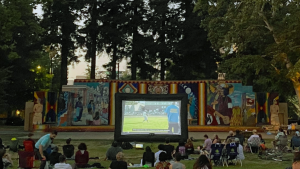
Across the United States environmental disasters and climate change are impacting all areas of life. While landmark climate victories have taken place at the national level, changemakers in rural areas and small towns are consistently under-resourced and must exercise everything in their toolbox to achieve wins locally. Film screenings are a powerful tool for organizers to gather their community and move them to action. Hosting these events is a unique way for organizers to share stories on screen that mirror the environmental problems they’re facing, as well as showcase successful organizing tactics that could be replicated locally. With all of this in mind, we're excited to announce the next round of Rural Cinema!
Rural Cinema is a training institute and community engagement program aimed at supporting leaders from rural areas and small towns across the United States in using film screenings as a resource in their work for environmental justice and protection. In 2024, we will be selecting organizations in six locations that are directly affected by polluting industries or climate disasters, as well as areas transitioning from being economically fueled by extractive energy industries to adopting more sustainable approaches.
The program will support participants in holding a community film series that engages their communities and advance their environmental justice goals over the course of one year. These events will create spaces for residents to come together, discuss issues affecting their communities, learn and be inspired by the visual content and one another’s experiences, and generate solutions that address their needs and priorities. Each individual or organization selected to participate will receive virtual trainings, technical assistance, film screening equipment, including a mobile solar battery to run the equipment, a $2,500 honorarium, and additional monetary support ($5,000) to hold film screenings in their community to support their goals throughout 2024.
Working Films strives to make all of our events and programs accessible, including our application processes. To request an accessibility accommodation or adjustment, please email [email protected], or call us at 910-342-9000.
Six community organizations will be selected through an application process. Applications are due on Tuesday, January 30th. The following are key elements of the program, which will begin in March 2024. Program Elements Virtual Training Institute We will provide four, two-hour virtual training sessions for selected applicants focused on best practices for using documentary film as an organizing, educational, civic engagement, and advocacy tool. These trainings will provide space for two representatives from each selected community to come together to learn how to utilize film screenings to move their community to action and ultimately advance their advocacy goals. This training will lay the groundwork for extensive ongoing support for each group’s film series. A few examples of training topics include: how to plan a community film series centered around key goals, audiences, and community actions, how to use the film screening equipment, how to work with drive-ins/how to create your own, and how to host in-person events and virtual events. Ongoing Support & Training We will provide ongoing, individualized training and consultation (in the form of regular check-ins) with participating community leaders as they incorporate film screenings into their work over the course of the year-long program. Working Films staff will work with each leader to identify specific goals, select films, and plan its strategic use in multiple public events (in-person or virtual) in their community over the course of 2024. Working Films will provide monetary support for community leaders to use for hard costs like venues, refreshments, screening rights fees, virtual tech support fees, speaking honorariums for filmmakers and other panelists, advertisements, etc. Film Screening Equipment & Solar Equipment We will provide each selected community with a full package of screening equipment that can be used for outdoor or indoor in-person events. This includes an inflatable screen, projector, sound system, and control console provided by Epic Outdoor Cinema. Also, since the goal of these screenings is to take action toward environmental justice solutions, each organization or individual will also receive a solar battery that will help power the film screening equipment. This equipment will permanently stay in each community. Recipients will be able to keep all of this equipment after the Rural Cinema program has ended for further use long into the future. Eligibility Organizations working in a rural area or small town that can be described in at least one of the ways below, are eligible to apply: - an area directly affected by polluting industries or climate disasters - an area abandoned by extractive energy industries - An area transitioning from, or trying to transition from, extractive energy industries to more sustainable approaches. Commitment Applicants must commit to assigning two individuals to lead their participation in Rural Cinema. These two individuals must attend each of the four, two-hour virtual training sessions to be held throughout the spring. The individuals will also be the primary liaison with Working Films’ staff as we support the organization in planning and implementing screening events over the course of the year. This does not preclude participation by other individuals/staff members. Selection Process Applications will be reviewed by a team of nonprofit and organizing leaders and selections will be made based on the following criteria:- Alignment of an organization’s mission with the stated focus area of addressing environmental issues in their community.
- An organization’s demonstrated enthusiasm and interest in using film in their work (previous use of film is not a requirement).
- The extent to which an organization has been able to come up with a vision and clear goals for their series, even if it is just a first draft. We know that sometimes overall vision and goals change throughout the course of the trainings.
- Capacity to attend the trainings and devote time to organizing a series in their community throughout 2024.
- The extent to which an organization reflects and/or shows accountability to the communities they organize and work with.
In the News
Working Films News
Race Flicks: Call for Proposals
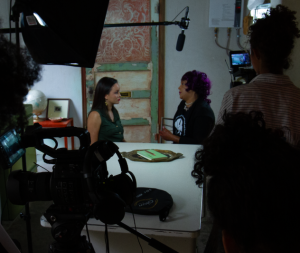
Race Forward and Working Films are thrilled to present Race Flicks, a micro-film festival and track of Facing Race: A National Conference being held in person in St. Louis, Missouri, November 20-22, 2024. Race Forward is pleased to be co-curating…
Race Forward and Working Films are thrilled to present Race Flicks, a micro-film festival and track of Facing Race: A National Conference being held in person in St. Louis, Missouri, November 20-22, 2024.
Race Forward is pleased to be co-curating the Race Flicks track with Working Films, a national leader in the use of documentaries for social change and environmental justice. Race Flicks lifts up critical issues of racial justice through film and opportunities for activists, organizers, nonprofits, and others to use them to advance their work. The Facing Race and Working Films team will work with selected filmmakers to create dynamic programming and discussions tailored to the topics raised by each film. Given that the conference will take place in Missouri, this year’s program will have a strong focus on stories of racial justice and equity in the U.S. Midwest by filmmakers based in the Midwest. While these films and filmmakers will be prioritized, we will also accept films made by and about communities in other areas around the world, given that racial justice issues are connected across regions. As in years past, the program will prioritize filmmakers telling stories about their own experiences, filmmaking that is accountable to and authentically represents the people and places featured, and films that hold great potential to build power among those directly impacted by the issues at hand.
Race Flicks focuses on showcasing the highest caliber filmmaking related to racial justice and strategies for using it to make an impact. The selected films will be chosen in large part because of the way they have been or could be used strategically by activists, organizers, nonprofits, and others to advance their work for racial justice. To apply, please complete the application by 11:59 pm PST on February 2, 2024 including a preview link to screen your film.
In the News
Working Films News
Announcing the 2023 Docs in Action Film Funds Recipients
While there is a long history of labor organizing in the United States, the present surge of worker-led organizing is remarkable. Workers are fed up and embracing self-organizing at unprecedented levels, especially in workplaces where the odds are stacked against…
While there is a long history of labor organizing in the United States, the present surge of worker-led organizing is remarkable. Workers are fed up and embracing self-organizing at unprecedented levels, especially in workplaces where the odds are stacked against them. This is all happening at a time when they are being called ‘essential’ but treated as disposable, and wealth inequality and union busting are on the rise. Workers are fighting back by reigniting and reimagining union organizing.
We can meet this moment by sharing the stories of workers across the country saying enough is enough. These stories need to invite even more workers into this rapidly growing movement. We need to emphasize why unions matter, highlight worker-led successes, provide how-tos for new organizers, and highlight the leadership of women, young people, and people of color. We need to demonstrate these truths, showcase our collective power, and prove that the masses will always be stronger than the few people at the top.
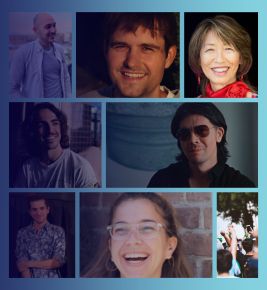
With this in mind, we are excited and honored to announce the recipients of the 2023 Docs in Action Film Fund. $120,000 was awarded to four film teams to complete short films that embody these narratives. They include: documentary producers and journalists José Jesús Zaragoza and Max Maldonado for From Exploitation to Empowerment; TJ United by emerging filmmaker Nadia Shaarawi; labor filmmaker Chris Sessions for Untitled Starbucks Workers United Film; and We Build Power from Oscar-nominated nonfiction producer Yoni Golijov, National Education Association 2023 Human and Civil Rights award winner Arlene Inouye, Emmy-nominated documentary filmmaker Yael Bridge, and Erick Stoll.
Working Films launched the Docs In Action Film Fund in 2018 to support the production of short documentaries that address critical issues of social and environmental justice. Because we believe that grassroots leaders and directly impacted people should hold the power to determine what stories are told and what films are funded to serve their movements, we continue to cede our role on the grant panel. The funded films were selected by our partners, which include Amazon Labor Union, North Carolina AFL-CIO, Starbucks Workers United, Union of Southern Service Workers, and United Farm Workers. Together with our partners, we will use these films to support the growing wave of worker-led organizing.
Many workers are reinventing how this looks and realizing what’s possible when we come together. These films invite all workers to do the same. As Eric Winston, leader of the Ignite Committee of USSW, stated, “We’re excited to see stories that expand on the idea of what a union is. People are told being in a union means a boss tells you are in a union, but a union just means coworkers coming together and saying they will be one voice to make conditions better. These stories demonstrate the power of workers doing that!"
 From Exploitation to Empowerment is a documentary that delves into the transformative impact of the Coalition of Immokalee Workers' (CIW) Fair Food Program (FFP) on the agricultural industry in the United States and beyond.
Through the lens of the dynamic, mobile farmworker Education Team, the film explores how the FFP's innovative Worker-driven Social Responsibility (WSR) model is not only eradicating exploitation and abuse in the food industry supply chain but also revolutionizing worker protection amidst climate change-driven heat waves.
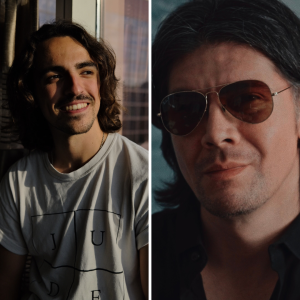
Max Maldonado (left) is a visual journalist and documentary filmmaker. Growing up in Florida, Max became fascinated by the state’s complicated history, politics, and relationship with nature. As the son of an Ecuadorian father, Max is interested in the immigrant experience and dual identity of being a first-generation American. Starting his career in journalism at his college’s radio station, he became intimately familiar with the issues that his community faces. He then went on to study documentary filmmaking at the Craig Newmark Graduate School of Journalism at CUNY, specializing in health and science reporting. Aside from working in documentary filmmaking, Max is also an accomplished audio journalist and has recently contributed his services to the Reveal podcast from the Center of Investigative Reporting on their Covid Tracking Project miniseries.
José Jesús Zaragoza (right) is a writer, photojournalist, and documentary filmmaker. Born and raised in the border town of Eagle Pass, Texas, into a family of migrant farmworkers, José started his journalism career while still in high school, writing for a bilingual newspaper covering the U.S./Mexico border. He moved to Florida, where he rose through the ranks at weekly newspapers as a writer and photojournalist, eventually becoming the publisher of three newspapers covering communities near the Everglades, before turning his focus to documentary film. José’s journalism experience, strong visual style, and family and cultural history combine to bring a unique perspective to the documentary projects he undertakes.
From Exploitation to Empowerment is produced José Jesús Zaragoza and Max Maldonado.
TJ United by Nadia Shaarawi
 The pandemic sparked a fire for young workers across the country to redefine what it means to organize your workplace when well-being, safety, and environmental certainty are compromised. Trader Joe’s United follows the path workers across unionized Trader Joe’s stores in Minneapolis, MN; Hadley, Massachusetts; and Louisville, Kentucky, are currently taking in sustaining the union strides made post-2020. In addition to capturing the workers organizing efforts, pains, and triumphs, the film explores how Trader Joe’s workers utilize media as a tool for the agency in their narrative to inspire workers across the country.
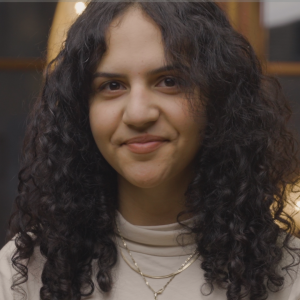
Nadia Shaarawi is an emerging filmmaker and production coordinator at Line Break Media, a mission-based video production and creative agency based in the Twin Cities in Minnesota. During the 2020 Uprisings, she spent her time for a year as a video journalist for the independent newsroom BLCK Press, documenting community stories and movement work across issues of public safety, environmental justice, transportation, and labor. Nadia is a 2021 Media Justice Network fellow and collaborator on Copaganda Clapback, a curriculum used to build media literacy in communities targeted by misinformation and disinformation.
Trader Joe's United is produced by Nolan Morice, Jill Zimmerman, and Sadie Luetmer. Impact production by Sean Lim.
Untitled Starbucks Workers United Film by Chris Sessions
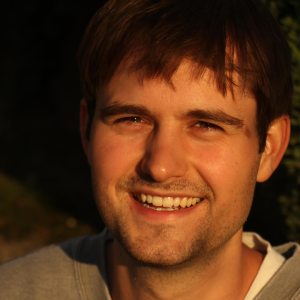 In 2021, when Starbucks Baristas in Buffalo, New York announced their intention to unionize, Starbucks stormed the market with over 100 specially trained corporate executives and managers from across the country. What ensued was an elaborate anti-union campaign, found to be the the most illegal attack on organizing workers rights in modern United States history. Drawing from never-before-seen footage captured by workers and organizers during this campaign, and created in close collaboration with barista-organizers, this film takes us to the front lines of the union organizing campaign that sparked a revival of the American labor movement.
Chris Sessions is a labor-focused documentary filmmaker and video journalist. Chris previously spent 8 months in Birmingham, Alabama documenting the historic 2021 Amazon fulfillment center union election which was held there. Chris’ videography from the campaign has been used by outlets from the 1619 Project to CNN Business, and in several of the first videos released by More Perfect Union, a now popular labor news source. Chris also provided breaking on-the-ground video coverage of the 2021-2023 Warrior Met Coal Miners strike. He has filmed and produced videos for the Rochester Regional Joint Board of Workers United, MeansTV, The Real News Network and the Retail Wholesale and Department Store Union Mid-South Council. Chris graduated from the Purchase College film conservatory.
Untitled Starbucks Workers United Film by Chris Sessions, Richard Bensinger, and Michael Sanabria.
We Build Power by Yoni Golijov, Arlene Inouye, Yael Bridge and Erick Stoll
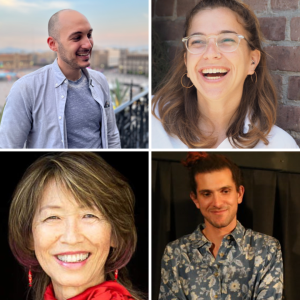 We Build Power explores urgent lessons and questions from how Los Angeles educators reinvigorated their union, fought racism, won and lost battles, and built lasting community coalitions. A fast-paced, toolkit documentary for workers worldwide.
Yoni Golijov (top left) is an Oscar-nominated nonfiction producer interested in collective decision-making and power-building; his recent films document educator's unions, harm reduction activists, and groundbreaking artists.
Arlene Inouye (bottom left) was the United Teachers Los Angeles (UTLA) treasurer, secretary and bargaining co-chair through multiple historic contract campaigns; she is now working with the UCLA Asian American Studies Center’s Asian American and Pacific Islanders (AAPI) Multimedia Textbook project, a one-of-a-kind narrative change resource being developed for high school students.
Yael Bridge (top right) is an Emmy-nominated documentary filmmaker; her first feature, The Big Scary "S" Word, explores the history and resurgence of socialism in the United States and premiered at Hot Docs 2019 and streams on Hulu.
Erick Stoll (bottom right) is a non-fiction filmmaker whose work has focused on labor, gentrification, and capitalism; Erick co-directed the feature documentary América, which was nominated for Peabody and Independent Spirit awards, and was cinematographer on the Academy Award-winning documentary American Factory.
We Build Power is produced by Yoni Golijov, Arlene Inouye, Yael Bridge and Erick Stoll.
Meet the 2023 Docs In Action Film Fund recipients:
From Exploitation to Empowerment (working title) by José Jesús Zaragoza and Max MaldonadoFrom Exploitation to Empowerment is a documentary that delves into the transformative impact of the Coalition of Immokalee Workers' (CIW) Fair Food Program (FFP) on the agricultural industry in the United States and beyond.
Through the lens of the dynamic, mobile farmworker Education Team, the film explores how the FFP's innovative Worker-driven Social Responsibility (WSR) model is not only eradicating exploitation and abuse in the food industry supply chain but also revolutionizing worker protection amidst climate change-driven heat waves.
Max Maldonado (left) is a visual journalist and documentary filmmaker. Growing up in Florida, Max became fascinated by the state’s complicated history, politics, and relationship with nature. As the son of an Ecuadorian father, Max is interested in the immigrant experience and dual identity of being a first-generation American. Starting his career in journalism at his college’s radio station, he became intimately familiar with the issues that his community faces. He then went on to study documentary filmmaking at the Craig Newmark Graduate School of Journalism at CUNY, specializing in health and science reporting. Aside from working in documentary filmmaking, Max is also an accomplished audio journalist and has recently contributed his services to the Reveal podcast from the Center of Investigative Reporting on their Covid Tracking Project miniseries.
José Jesús Zaragoza (right) is a writer, photojournalist, and documentary filmmaker. Born and raised in the border town of Eagle Pass, Texas, into a family of migrant farmworkers, José started his journalism career while still in high school, writing for a bilingual newspaper covering the U.S./Mexico border. He moved to Florida, where he rose through the ranks at weekly newspapers as a writer and photojournalist, eventually becoming the publisher of three newspapers covering communities near the Everglades, before turning his focus to documentary film. José’s journalism experience, strong visual style, and family and cultural history combine to bring a unique perspective to the documentary projects he undertakes.
From Exploitation to Empowerment is produced José Jesús Zaragoza and Max Maldonado.
TJ United by Nadia Shaarawi
The pandemic sparked a fire for young workers across the country to redefine what it means to organize your workplace when well-being, safety, and environmental certainty are compromised. Trader Joe’s United follows the path workers across unionized Trader Joe’s stores in Minneapolis, MN; Hadley, Massachusetts; and Louisville, Kentucky, are currently taking in sustaining the union strides made post-2020. In addition to capturing the workers organizing efforts, pains, and triumphs, the film explores how Trader Joe’s workers utilize media as a tool for the agency in their narrative to inspire workers across the country.
Nadia Shaarawi is an emerging filmmaker and production coordinator at Line Break Media, a mission-based video production and creative agency based in the Twin Cities in Minnesota. During the 2020 Uprisings, she spent her time for a year as a video journalist for the independent newsroom BLCK Press, documenting community stories and movement work across issues of public safety, environmental justice, transportation, and labor. Nadia is a 2021 Media Justice Network fellow and collaborator on Copaganda Clapback, a curriculum used to build media literacy in communities targeted by misinformation and disinformation.
Trader Joe's United is produced by Nolan Morice, Jill Zimmerman, and Sadie Luetmer. Impact production by Sean Lim.
Untitled Starbucks Workers United Film by Chris Sessions
In 2021, when Starbucks Baristas in Buffalo, New York announced their intention to unionize, Starbucks stormed the market with over 100 specially trained corporate executives and managers from across the country. What ensued was an elaborate anti-union campaign, found to be the the most illegal attack on organizing workers rights in modern United States history. Drawing from never-before-seen footage captured by workers and organizers during this campaign, and created in close collaboration with barista-organizers, this film takes us to the front lines of the union organizing campaign that sparked a revival of the American labor movement.
Chris Sessions is a labor-focused documentary filmmaker and video journalist. Chris previously spent 8 months in Birmingham, Alabama documenting the historic 2021 Amazon fulfillment center union election which was held there. Chris’ videography from the campaign has been used by outlets from the 1619 Project to CNN Business, and in several of the first videos released by More Perfect Union, a now popular labor news source. Chris also provided breaking on-the-ground video coverage of the 2021-2023 Warrior Met Coal Miners strike. He has filmed and produced videos for the Rochester Regional Joint Board of Workers United, MeansTV, The Real News Network and the Retail Wholesale and Department Store Union Mid-South Council. Chris graduated from the Purchase College film conservatory.
Untitled Starbucks Workers United Film by Chris Sessions, Richard Bensinger, and Michael Sanabria.
We Build Power by Yoni Golijov, Arlene Inouye, Yael Bridge and Erick Stoll
We Build Power explores urgent lessons and questions from how Los Angeles educators reinvigorated their union, fought racism, won and lost battles, and built lasting community coalitions. A fast-paced, toolkit documentary for workers worldwide.
Yoni Golijov (top left) is an Oscar-nominated nonfiction producer interested in collective decision-making and power-building; his recent films document educator's unions, harm reduction activists, and groundbreaking artists.
Arlene Inouye (bottom left) was the United Teachers Los Angeles (UTLA) treasurer, secretary and bargaining co-chair through multiple historic contract campaigns; she is now working with the UCLA Asian American Studies Center’s Asian American and Pacific Islanders (AAPI) Multimedia Textbook project, a one-of-a-kind narrative change resource being developed for high school students.
Yael Bridge (top right) is an Emmy-nominated documentary filmmaker; her first feature, The Big Scary "S" Word, explores the history and resurgence of socialism in the United States and premiered at Hot Docs 2019 and streams on Hulu.
Erick Stoll (bottom right) is a non-fiction filmmaker whose work has focused on labor, gentrification, and capitalism; Erick co-directed the feature documentary América, which was nominated for Peabody and Independent Spirit awards, and was cinematographer on the Academy Award-winning documentary American Factory.
We Build Power is produced by Yoni Golijov, Arlene Inouye, Yael Bridge and Erick Stoll.
The Docs in Action Film Fund is made possible with support from the John D. and Catherine T. MacArthur Foundation
In the News
Working Films News
A Round of Applause for Impact Kickstart Alumni!
Since Impact Kickstart's creation six years ago, we have had the privilege of supporting underrepresented filmmakers in developing impact campaigns that address some of the most critical issues of our time. We're thrilled by what's recently unfolded for some of…
Since Impact Kickstart's creation six years ago, we have had the privilege of supporting underrepresented filmmakers in developing impact campaigns that address some of the most critical issues of our time. We're thrilled by what's recently unfolded for some of our past grantees!
 Following a BlackStar Film Festival win for Best Feature Documentary in August, Fire Through Dry Grass' Vince Pierce (Musician, Impact Strategist, Reality Poet), was celebrated on Good Morning America and awarded $1 million for his organization Open Doors. Fire Through Dry Grass offers a rare look inside a New York City nursing home during the COVID-19 pandemic. Fire Through Dry Grass is also a New York Times Critics Pick!
Continuing with the good news, HBO Documentary Films has acquired U.S. and Canada television and streaming rights to Going to Mars: The Nikki Giovanni Project, winner of the Grand Jury Prize for U.S. Documentary at Sundance, Audience Award for Best Feature Documentary at Black Star Film Festival, and Jury Award for Outstanding Documentary Feature at Frameline Film Festival. The film directed and produced by Joe Brewster and Michèle Stephenson examines the life and career of poet and activist Nikki Giovanni, who rose to fame in the 1960s through her writings and television appearances.
 The Storming Caesar's Palace impact campaign is well underway! More than 50 screenings have taken place since the film opened the BlackStar Film Festival in 2022, where director Hazel Gurland was awarded the Shine First Time Filmmaker Award. From the Jimmy Carter Presidential Library, to the Care Workers Can’t Wait Summit, The BIG (Basic Income Guarantee) Conference, to the Black Maternal Mental Health Summit - the film has been lifting up and celebrating Black Women's work while fortifying the efforts of today's grassroots leaders and creating opportunities for dialogue and action with organizations and legislators to build solutions to poverty from the ground up.
Last and certainly not least, Leya Hale, Bring Her Home (Director/Producer) was featured as part of the 2023 Film North Forum panel, Staying Put: Building a Film Practice Wherever You Are, focused on building a filmmaking practice and community outside of the big media hubs and challenging established models of what it takes to succeed in a documentary career.
We will continue to highlight the incredible work of all our Impact Kickstart alumni, so stay tuned to our newsletter, blog, and social media channels: @workingfilms. The 2023 Impact Kickstart annual call for applications closed in early September, and announcements will be made in November.
Following a BlackStar Film Festival win for Best Feature Documentary in August, Fire Through Dry Grass' Vince Pierce (Musician, Impact Strategist, Reality Poet), was celebrated on Good Morning America and awarded $1 million for his organization Open Doors. Fire Through Dry Grass offers a rare look inside a New York City nursing home during the COVID-19 pandemic. Fire Through Dry Grass is also a New York Times Critics Pick!
Continuing with the good news, HBO Documentary Films has acquired U.S. and Canada television and streaming rights to Going to Mars: The Nikki Giovanni Project, winner of the Grand Jury Prize for U.S. Documentary at Sundance, Audience Award for Best Feature Documentary at Black Star Film Festival, and Jury Award for Outstanding Documentary Feature at Frameline Film Festival. The film directed and produced by Joe Brewster and Michèle Stephenson examines the life and career of poet and activist Nikki Giovanni, who rose to fame in the 1960s through her writings and television appearances.
The Storming Caesar's Palace impact campaign is well underway! More than 50 screenings have taken place since the film opened the BlackStar Film Festival in 2022, where director Hazel Gurland was awarded the Shine First Time Filmmaker Award. From the Jimmy Carter Presidential Library, to the Care Workers Can’t Wait Summit, The BIG (Basic Income Guarantee) Conference, to the Black Maternal Mental Health Summit - the film has been lifting up and celebrating Black Women's work while fortifying the efforts of today's grassroots leaders and creating opportunities for dialogue and action with organizations and legislators to build solutions to poverty from the ground up.
Last and certainly not least, Leya Hale, Bring Her Home (Director/Producer) was featured as part of the 2023 Film North Forum panel, Staying Put: Building a Film Practice Wherever You Are, focused on building a filmmaking practice and community outside of the big media hubs and challenging established models of what it takes to succeed in a documentary career.
We will continue to highlight the incredible work of all our Impact Kickstart alumni, so stay tuned to our newsletter, blog, and social media channels: @workingfilms. The 2023 Impact Kickstart annual call for applications closed in early September, and announcements will be made in November.
In the News
Working Films News
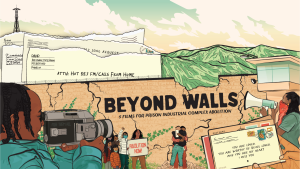
Beyond Walls Breaks Down Barriers
Beyond Walls breaks down barriers in its most recent screening event at the Mayday Space in New York City This summer, Working Films is launching our organizing initiative Beyond Walls. In partnership with the Center for Political Education, Critical…
Beyond Walls breaks down barriers in its most recent screening event at the Mayday Space in New York City
This summer, Working Films is launching our organizing initiative Beyond Walls. In partnership with the Center for Political Education, Critical Resistance, MPD150, and Survived + Punished, this project helps us reimagine better alternatives to policing and prisons through the power of storytelling. Beyond Walls features documentary films that help define and amplify what abolition of the prison industrial complex* looks like. As part of our initiative, we are touring these films with organizations that are directly impacted by and leading the change toward prison abolition. In our most recent event on June 29th, community members and organizers gathered at the Mayday Space, in Bushwick, NY. Mayday Space is known as a hub for movement leaders to work, learn, celebrate and build together. The event was a powerful demonstration of space, story and solidarity coming together. The featured films highlight the social and political realities of incarcerated people and how maintaining connection beyond walls can be a form of resistance against the carceral system. After the screening, attendees broke into small group discussions and then took part in a letter-writing workshop with Black & Pink’s NYC Chapter. Black & Pink is a nonprofit dedicated to the liberation of LGBTQIA2S+ people and those living with HIV/AIDS who have been affected by the criminal punishment system. In their PenPal program, Black & Pink provides a platform for incarcerated and non-incarcerated people to forge relationships as a means of support building and harm reduction. The workshop was an opportunity for guests to connect with LGBTQIA2S+ individuals who are currently incarcerated.“Because they had just watched the films, [event] participants were very thoughtful and intentional with their cards,” said Bran, a Black & Pink NYC organizer, in regard to the event’s letter-writing activity.Overall, attendees were able to further understand the realities of incarcerated individuals and gain a new perspective on what justice can look like.
“[It’s important to] have community members watch community-led movies,” said Ienna Fernandez, the programs manager at the Mayday Space.The Mayday Space hosts events in collaboration with grassroots organizations and individual activists. This event allowed people from different industries and regions to connect and share new ways of organizing. Tanya Nguyen, an organizer at Black & Pink NYC, emphasized how events like this have the power to “re-energize people and remind them of the human faces behind the work that we do.” Beyond Walls is part of Working Films’ “Docs in Action” program. Docs in Action provides funding and distribution to short documentaries that explore topics of social and environmental justice. Working Films takes a collaborative approach when working with host organizations to curate screening events. Our goal is to help them facilitate activities and discussions that best align with the values of their community and their organization. With the films as a catalyst, the screenings allow time to inform, plan and take action toward a better future. * The Prison Industrial Complex (PIC) is a term to describe the overlapping interests of government and industry that use surveillance, policing and imprisonment as solutions to economic, social and political problems.

Upcoming screenings for Beyond Walls can be found here. If you are interested in hosting a screening for Beyond Walls, fill out the request formhere.