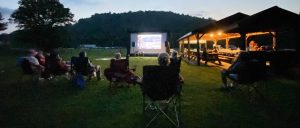
Rural Cinema is a program that trains environmental justice organizers to use film screenings to bring people together and solve challenges facing their communities. The program provides grassroots groups and organizations with film screening equipment by EPIC Outdoor Cinema (projectors,…
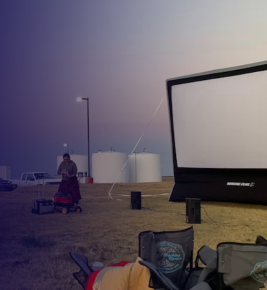
Rural Cinema is a program that trains environmental justice organizers to use film screenings to bring people together and solve challenges facing their communities. The program provides grassroots groups and organizations with film screening equipment by EPIC Outdoor Cinema (projectors, screens, speakers), solar batteries to run the equipment, and funding to host a film series that can inform and inspire people to get involved in their efforts.
Recognizing the importance of documentary storytelling to prompt civic dialogue and action during a time when rural areas across the country are increasingly devastated by the COVID-19 pandemic, climate disasters, and polluting industries, Rural Cinema will help organizers create much needed spaces for building community.
We are excited to announce the five rural-based organizations working towards environmental justice across the United States that were selected for Rural Cinema 2022: Faith in Place (Illinois), NAZO Society (South Dakota), Camas to Condors Project (Idaho), Our Future West Virginia (West Virginia), and Rogue Climate (Oregon). Check out their missions and the representatives who will be taking part:
Faith In Place
 Since 1999, Faith in Place has empowered Illinois people of all faiths to be leaders in caring for the Earth, providing resources to educate, connect, and advocate for healthier communities. As a statewide, multifaith 501(c)(3) nonprofit organization, Faith in Place serves Illinoisans of diverse races, ethnicities, religions, genders, ages, socioeconomic conditions, and geographic regions. Our strong commitment to justice, equity, diversity, and inclusion derives from our environmental justice mission and reflects the diverse communities we work with and serve
.
Since 1999, Faith in Place has empowered Illinois people of all faiths to be leaders in caring for the Earth, providing resources to educate, connect, and advocate for healthier communities. As a statewide, multifaith 501(c)(3) nonprofit organization, Faith in Place serves Illinoisans of diverse races, ethnicities, religions, genders, ages, socioeconomic conditions, and geographic regions. Our strong commitment to justice, equity, diversity, and inclusion derives from our environmental justice mission and reflects the diverse communities we work with and serve
.
 Wade Halva grew up in Raleigh, NC at the end of a half-mile long dead end dirt road. The back property line was a creek, and Wade’s early playground was the woods. His roots in the forest continue to ground his care for creation. Wade received his BA in history and religious studies from the College of Wooster, a Master’s in Divinity from Columbia Theological Seminary, and a Master’s of Arts in Christian Education from Union Presbyterian Seminary. He has served in parish ministry in the Presbyterian Church (USA) in Illinois and Utah. For rest and relaxation, Wade enjoys the mountains and the beach, the forests and the bluffs, and Malawi, Tanzania, and Zambia hold a special place in his heart.
Camas to Condors Project Camas to Condors is a restoration and conservation project encompassing the Blue Mountains ecoregion, the Bitterroot Mountains, and the Salmon, Clearwater and Tucannon River Subbasins, all of which are contained within the Nez Perce Tribe’s usual and accustomed areas. It is a tribally-led, collaborative, multidisciplinary response to the dire threats climate change is bringing to places, species and lifeways in our shared home. Our mission is to build culturally relevant conservation power in the Nez Perce homelands. Develop and share a holistic vision for climate + cultural + ecological resilience. Grow an ethical, inclusive, and adaptive restoration economy/a healing economy. We envision a shared home where the time-tested Indigenous relationship with the land is honored as a model of resilience; where land protection is restitution for past harm; where land restoration is an arena for eco-cultural healing and a foundation of the regional economy; and where stewardship priorities shape land management that is responsive, holistic, and just. Meadow Wheaton (Nimiipuu) grew up in Willamette Valley of Oregon. She is currently finishing her AmeriCorps VISTA service with the Nez Perce Tribe Climate Change Program and moving on to finish her undergraduate at the University of Idaho in Broadcasting and Digital Media. She hopes to start a career in film making with a focus on communicating environmental science, and traditional ecological knowledge.
Tiyana Casey (Wasq'u, Yakama, Umatilla, Nimiipuu) uses science to perpetuate the values of her indigenous culture; advancing the understanding and management of her ancestral territories for both tribal and non-tribal people. As a life-long advocate for tribal youth, she has been responsible for the cultural transmission and education of indigenous youth across the PNW with the intention of offering healing pathways to professional spaces. The synthesis of her education, research, and leadership roles with the invaluable education she has received from tribal elders, hunters, gatherers, and community members informs Tiyana's current roles both professionally and in her community.
Meadow Wheaton (Nimiipuu) grew up in Willamette Valley of Oregon. She is currently finishing her AmeriCorps VISTA service with the Nez Perce Tribe Climate Change Program and moving on to finish her undergraduate at the University of Idaho in Broadcasting and Digital Media. She hopes to start a career in film making with a focus on communicating environmental science, and traditional ecological knowledge.
Tiyana Casey (Wasq'u, Yakama, Umatilla, Nimiipuu) uses science to perpetuate the values of her indigenous culture; advancing the understanding and management of her ancestral territories for both tribal and non-tribal people. As a life-long advocate for tribal youth, she has been responsible for the cultural transmission and education of indigenous youth across the PNW with the intention of offering healing pathways to professional spaces. The synthesis of her education, research, and leadership roles with the invaluable education she has received from tribal elders, hunters, gatherers, and community members informs Tiyana's current roles both professionally and in her community.
Nažó Society ‘NAZO’ means to “sound or blow the whistle in alarm” in Lakota. Nazo was formed in 2019, when a group of women came together on the Cheyenne River Reservation to discuss the threat of the man camps which would accompany the TransCanada KXL Pipeline. It has since evolved into a safe space for people to share experiences and community concerns. NAZO seeks justice for women/ children/ relatives who experience sex trafficking and those who are targeted. We aim to educate our communities in preventive action regarding the hazards of the extractive industries that are currently targeting our lands in South Dakota. We organize to build awareness, patrol our rural reservation communities and offer educational presentations to our schools. We also host self-defense training. Our reservations in South Dakota have long been targeted by extractive industries. Indigenous people around the world are on the front lines in fighting against environmental destruction. Women have long held powerful leadership within these resistance movements; a fact that is often unrecognized by larger society. When we fight for the earth, we are fighting for our own survival.
 Marcella Gilbert is the daughter of Madonna Thunder Hawk and a Lakota and Dakota community organizer with a focus on food sovereignty and cultural revitalization. She earned a Master’s Degree in Nutrition from South Dakota State University. Gilbert was a 2014 Cohort of the Bush Foundation's Native Nations Rebuilders Program.
Ryia LeBeau is Lakota and Diné, belongs to the Two Kettle Band at Cheyenne River, and grew up on the vast, open lands of the Oceti Sakowin. She is studying Indigenous and American Indian Studies at Haskell Indian Nations University, founded in 1884 as an Indian Boarding School for children. When not studying, Ryia works as a media and oral history apprentice for the Warrior Women Project, a collective that works at the intersection of media, history and Indigenous matriarchy. She is also a part of Nažó Society, describing her role as “a niece and granddaughter; I listen, I observe, and learn by doing—honoring the stage of ‘wikóškalaka’ (the ‘young woman’ phase of life) learning the very “how to” from my elder women.”
[video width="1920" height="1080" mp4="https://www.workingfilms.org/wp-content/uploads/2022/04/Rural-Cinema_Video.mp4" autoplay="true" preload="auto" loop="true"][/video]
Marcella Gilbert is the daughter of Madonna Thunder Hawk and a Lakota and Dakota community organizer with a focus on food sovereignty and cultural revitalization. She earned a Master’s Degree in Nutrition from South Dakota State University. Gilbert was a 2014 Cohort of the Bush Foundation's Native Nations Rebuilders Program.
Ryia LeBeau is Lakota and Diné, belongs to the Two Kettle Band at Cheyenne River, and grew up on the vast, open lands of the Oceti Sakowin. She is studying Indigenous and American Indian Studies at Haskell Indian Nations University, founded in 1884 as an Indian Boarding School for children. When not studying, Ryia works as a media and oral history apprentice for the Warrior Women Project, a collective that works at the intersection of media, history and Indigenous matriarchy. She is also a part of Nažó Society, describing her role as “a niece and granddaughter; I listen, I observe, and learn by doing—honoring the stage of ‘wikóškalaka’ (the ‘young woman’ phase of life) learning the very “how to” from my elder women.”
[video width="1920" height="1080" mp4="https://www.workingfilms.org/wp-content/uploads/2022/04/Rural-Cinema_Video.mp4" autoplay="true" preload="auto" loop="true"][/video]
Our Future West Virginia Our Future West Virginia meets folk where they are, helping communities build local power to upend oppressive systems around them. We envision a West Virginia where EVERY person has the justice, dignity, and equity needed to thrive. Our Future West Virginia is a statewide non-profit, working on local and state issues of Civic Engagement, Education, Healthcare, and Environmental, Racial, Economic, and Social Justice. We work to change the balance of power through grassroots led policy change, developing local leadership, and bringing diverse voices together.
 Kathy Ferguson is a community advocate from the unincorporated district of Institute, WV, where she's been using her 25 years of experience working in social services within the criminal justice system to inform her activism and organizing work. Currently serving as the Interim Exec. Director at OFWV, she continues to demonstrate a clear commitment to helping those who are in most need and giving voice to those who are disenfranchised. An agent for change Ms. Ferguson is a believer in social justice and equality for all and dedicates both her professional and personal time towards this end.
Traci Phillips holds a B.S. in Communications from Bowie State University and has worked for companies such as C-SPAN, CBS Newspath, BET Nightly News, Radio-One Inc., XM Satellite Radio, Fox 5 in Washington, DC and WCHS-TV in Charleston, WV. She is an on-air personality for WSVQ 92.1’s Charleston’s Voice for Equity and Empowerment, an initiative of the Partnership of African American Churches and is an active member of the Charleston, WV NAACP. She is currently the Interim Communications Director with Our Future West Virginia. Traci and her husband Justin have 3 children and live in Charleston, WV.
Kathy Ferguson is a community advocate from the unincorporated district of Institute, WV, where she's been using her 25 years of experience working in social services within the criminal justice system to inform her activism and organizing work. Currently serving as the Interim Exec. Director at OFWV, she continues to demonstrate a clear commitment to helping those who are in most need and giving voice to those who are disenfranchised. An agent for change Ms. Ferguson is a believer in social justice and equality for all and dedicates both her professional and personal time towards this end.
Traci Phillips holds a B.S. in Communications from Bowie State University and has worked for companies such as C-SPAN, CBS Newspath, BET Nightly News, Radio-One Inc., XM Satellite Radio, Fox 5 in Washington, DC and WCHS-TV in Charleston, WV. She is an on-air personality for WSVQ 92.1’s Charleston’s Voice for Equity and Empowerment, an initiative of the Partnership of African American Churches and is an active member of the Charleston, WV NAACP. She is currently the Interim Communications Director with Our Future West Virginia. Traci and her husband Justin have 3 children and live in Charleston, WV.
Rogue Climate Rogue Climate’s mission is to empower Southern Oregon communities most impacted by climate change, including low-income, rural, youth, seniors, and communities of color, to win climate justice by organizing for clean energy, sustainable jobs, and a healthy environment.
 Blanca Gutierrez is the Leadership Development and Cultural Director at Rogue Climate and works to build leadership with the Latinx community in the Rogue Valley. Raised in Southern Oregon she grew up with a family who worked hard as farmworkers and in warehouses for little pay. After seeing and experiencing the disparities that appear in every space of the nation, she engaged in organizing for climate justice and the well-being of future generations, especially low-income folks and communities of color who continue to bear the brunt of climate chaos, the housing crisis, and more. Blanca believes that art in the movement and in life are crucial and continues to make art as part of daily life.
Russell Zook is Rogue Climate’s Operations Director as well as a multi-faceted Artist and Producer. Russell’s role at Rogue Climate is to build and maintain infrastructure and systems to support Rogue Climate’s staff and community leaders. He has lived in the Southern Oregon Rogue Valley since 2015 and worked at the Oregon Shakespeare Festival where he was charged with producing and managing engagement programs; the Living Ideas: Art and Community Dialogue Series, and various programs for groups, patrons and community members. During this time, he co-created an immersive experience that combined live storytelling and emerging technologies entitled Take Them Into The Dirt and subsequently directed a documentary film on the making of the project.
Blanca Gutierrez is the Leadership Development and Cultural Director at Rogue Climate and works to build leadership with the Latinx community in the Rogue Valley. Raised in Southern Oregon she grew up with a family who worked hard as farmworkers and in warehouses for little pay. After seeing and experiencing the disparities that appear in every space of the nation, she engaged in organizing for climate justice and the well-being of future generations, especially low-income folks and communities of color who continue to bear the brunt of climate chaos, the housing crisis, and more. Blanca believes that art in the movement and in life are crucial and continues to make art as part of daily life.
Russell Zook is Rogue Climate’s Operations Director as well as a multi-faceted Artist and Producer. Russell’s role at Rogue Climate is to build and maintain infrastructure and systems to support Rogue Climate’s staff and community leaders. He has lived in the Southern Oregon Rogue Valley since 2015 and worked at the Oregon Shakespeare Festival where he was charged with producing and managing engagement programs; the Living Ideas: Art and Community Dialogue Series, and various programs for groups, patrons and community members. During this time, he co-created an immersive experience that combined live storytelling and emerging technologies entitled Take Them Into The Dirt and subsequently directed a documentary film on the making of the project.
Since 1999, Faith in Place has empowered Illinois people of all faiths to be leaders in caring for the Earth, providing resources to educate, connect, and advocate for healthier communities. As a statewide, multifaith 501(c)(3) nonprofit organization, Faith in Place serves Illinoisans of diverse races, ethnicities, religions, genders, ages, socioeconomic conditions, and geographic regions. Our strong commitment to justice, equity, diversity, and inclusion derives from our environmental justice mission and reflects the diverse communities we work with and serve
.
Wade Halva grew up in Raleigh, NC at the end of a half-mile long dead end dirt road. The back property line was a creek, and Wade’s early playground was the woods. His roots in the forest continue to ground his care for creation. Wade received his BA in history and religious studies from the College of Wooster, a Master’s in Divinity from Columbia Theological Seminary, and a Master’s of Arts in Christian Education from Union Presbyterian Seminary. He has served in parish ministry in the Presbyterian Church (USA) in Illinois and Utah. For rest and relaxation, Wade enjoys the mountains and the beach, the forests and the bluffs, and Malawi, Tanzania, and Zambia hold a special place in his heart.
Camas to Condors Project Camas to Condors is a restoration and conservation project encompassing the Blue Mountains ecoregion, the Bitterroot Mountains, and the Salmon, Clearwater and Tucannon River Subbasins, all of which are contained within the Nez Perce Tribe’s usual and accustomed areas. It is a tribally-led, collaborative, multidisciplinary response to the dire threats climate change is bringing to places, species and lifeways in our shared home. Our mission is to build culturally relevant conservation power in the Nez Perce homelands. Develop and share a holistic vision for climate + cultural + ecological resilience. Grow an ethical, inclusive, and adaptive restoration economy/a healing economy. We envision a shared home where the time-tested Indigenous relationship with the land is honored as a model of resilience; where land protection is restitution for past harm; where land restoration is an arena for eco-cultural healing and a foundation of the regional economy; and where stewardship priorities shape land management that is responsive, holistic, and just.
Meadow Wheaton (Nimiipuu) grew up in Willamette Valley of Oregon. She is currently finishing her AmeriCorps VISTA service with the Nez Perce Tribe Climate Change Program and moving on to finish her undergraduate at the University of Idaho in Broadcasting and Digital Media. She hopes to start a career in film making with a focus on communicating environmental science, and traditional ecological knowledge.
Tiyana Casey (Wasq'u, Yakama, Umatilla, Nimiipuu) uses science to perpetuate the values of her indigenous culture; advancing the understanding and management of her ancestral territories for both tribal and non-tribal people. As a life-long advocate for tribal youth, she has been responsible for the cultural transmission and education of indigenous youth across the PNW with the intention of offering healing pathways to professional spaces. The synthesis of her education, research, and leadership roles with the invaluable education she has received from tribal elders, hunters, gatherers, and community members informs Tiyana's current roles both professionally and in her community.
Nažó Society
‘NAZO’ means to “sound or blow the whistle in alarm” in Lakota. Nazo was formed in 2019, when a group of women came together on the Cheyenne River Reservation to discuss the threat of the man camps which would accompany the TransCanada KXL Pipeline. It has since evolved into a safe space for people to share experiences and community concerns. NAZO seeks justice for women/ children/ relatives who experience sex trafficking and those who are targeted. We aim to educate our communities in preventive action regarding the hazards of the extractive industries that are currently targeting our lands in South Dakota. We organize to build awareness, patrol our rural reservation communities and offer educational presentations to our schools. We also host self-defense training. Our reservations in South Dakota have long been targeted by extractive industries. Indigenous people around the world are on the front lines in fighting against environmental destruction. Women have long held powerful leadership within these resistance movements; a fact that is often unrecognized by larger society. When we fight for the earth, we are fighting for our own survival.
Marcella Gilbert is the daughter of Madonna Thunder Hawk and a Lakota and Dakota community organizer with a focus on food sovereignty and cultural revitalization. She earned a Master’s Degree in Nutrition from South Dakota State University. Gilbert was a 2014 Cohort of the Bush Foundation's Native Nations Rebuilders Program.
Ryia LeBeau is Lakota and Diné, belongs to the Two Kettle Band at Cheyenne River, and grew up on the vast, open lands of the Oceti Sakowin. She is studying Indigenous and American Indian Studies at Haskell Indian Nations University, founded in 1884 as an Indian Boarding School for children. When not studying, Ryia works as a media and oral history apprentice for the Warrior Women Project, a collective that works at the intersection of media, history and Indigenous matriarchy. She is also a part of Nažó Society, describing her role as “a niece and granddaughter; I listen, I observe, and learn by doing—honoring the stage of ‘wikóškalaka’ (the ‘young woman’ phase of life) learning the very “how to” from my elder women.”
[video width="1920" height="1080" mp4="https://www.workingfilms.org/wp-content/uploads/2022/04/Rural-Cinema_Video.mp4" autoplay="true" preload="auto" loop="true"][/video]
Our Future West Virginia
Our Future West Virginia meets folk where they are, helping communities build local power to upend oppressive systems around them. We envision a West Virginia where EVERY person has the justice, dignity, and equity needed to thrive. Our Future West Virginia is a statewide non-profit, working on local and state issues of Civic Engagement, Education, Healthcare, and Environmental, Racial, Economic, and Social Justice. We work to change the balance of power through grassroots led policy change, developing local leadership, and bringing diverse voices together.
Kathy Ferguson is a community advocate from the unincorporated district of Institute, WV, where she's been using her 25 years of experience working in social services within the criminal justice system to inform her activism and organizing work. Currently serving as the Interim Exec. Director at OFWV, she continues to demonstrate a clear commitment to helping those who are in most need and giving voice to those who are disenfranchised. An agent for change Ms. Ferguson is a believer in social justice and equality for all and dedicates both her professional and personal time towards this end.
Traci Phillips holds a B.S. in Communications from Bowie State University and has worked for companies such as C-SPAN, CBS Newspath, BET Nightly News, Radio-One Inc., XM Satellite Radio, Fox 5 in Washington, DC and WCHS-TV in Charleston, WV. She is an on-air personality for WSVQ 92.1’s Charleston’s Voice for Equity and Empowerment, an initiative of the Partnership of African American Churches and is an active member of the Charleston, WV NAACP. She is currently the Interim Communications Director with Our Future West Virginia. Traci and her husband Justin have 3 children and live in Charleston, WV.
Rogue Climate
Rogue Climate’s mission is to empower Southern Oregon communities most impacted by climate change, including low-income, rural, youth, seniors, and communities of color, to win climate justice by organizing for clean energy, sustainable jobs, and a healthy environment.
Blanca Gutierrez is the Leadership Development and Cultural Director at Rogue Climate and works to build leadership with the Latinx community in the Rogue Valley. Raised in Southern Oregon she grew up with a family who worked hard as farmworkers and in warehouses for little pay. After seeing and experiencing the disparities that appear in every space of the nation, she engaged in organizing for climate justice and the well-being of future generations, especially low-income folks and communities of color who continue to bear the brunt of climate chaos, the housing crisis, and more. Blanca believes that art in the movement and in life are crucial and continues to make art as part of daily life.
Russell Zook is Rogue Climate’s Operations Director as well as a multi-faceted Artist and Producer. Russell’s role at Rogue Climate is to build and maintain infrastructure and systems to support Rogue Climate’s staff and community leaders. He has lived in the Southern Oregon Rogue Valley since 2015 and worked at the Oregon Shakespeare Festival where he was charged with producing and managing engagement programs; the Living Ideas: Art and Community Dialogue Series, and various programs for groups, patrons and community members. During this time, he co-created an immersive experience that combined live storytelling and emerging technologies entitled Take Them Into The Dirt and subsequently directed a documentary film on the making of the project.
Rural Cinema is made possible with generous support from the Kendeda Fund, Perspective, Putnam Foundation, and the Z. Smith Reynolds Foundation.


 The Works-in-Progress Lab (WiP) is a partnership between
  Play is a lifeline for Black girls across the generations. Little Sallie Walker tells the story of Patricia, Billie Jean, Raisha, and Kristi, who instinctively understood that coming-of-age in America involved creating and cultivating worlds-of-make believe through different types of play. Pattycake, dress-up, double dutch, dollmaking, and hide-and-seek offered sanctuary from discrimination, violence, and poverty.
 My Mother is an Artist tracks the impact of one mother’s incarceration and follows her journey to get justice, make art and find joy. After serving 30 years in prison for murder, Lajuana Lampkins is now a staple in Wicker Park, Chicago, where she sells her drawings to the late-night crowd.
 The Jungle Brothers are known as the pioneers of the fusion of jazz, hip-hop, and house music.Their hip-house club hit single, “I’ll House You” changed the course of hip-hop and dance music by expanding it across the globe. With all the fame and success, Michael Small aka “Mike Gee”, an unassuming licensed plumber and family man shows humility and astounding work ethic by continuing to work full time as a plumber while performing with The Jungle Brothers
 Paradise is deep dive into a multiracial Caribbean American family history exploring race, immigration, and imperialism. Featuring interviews from Sumney’s family, historians, and others and using a variety of stylistic elements to interrogate these issues, the film is a series of five non-linear acts tied together by the central themes of race and national origin.

 As rural communities across the US are increasingly devastated by the cascading crises of a global pandemic coupled with stronger and more frequent climate disasters, civil discourse about the environmental and public health challenges in non-urban communities has also broken down. A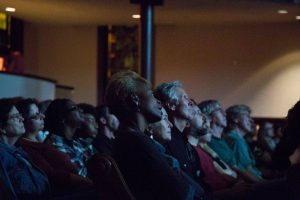
 Native women make up less than one percent of the U.S. population yet face murder rates that are more than ten times the national average. Bring Her Home follows three indigenous women – an artist, an activist, and a politician – as they fight to vindicate and honor their missing and murdered relatives who have fallen victims to a growing epidemic across Indian country. Despite the lasting effects from colonization, each woman must search for healing while navigating racist systems that brought about this very crisis.
  Fire Through Dry Grass uncovers in real time, and with singular access, the devastation nursing home residents experienced during the coronavirus pandemic. Co-Director Andres “Jay” Molina is one of the Reality Poets, Black and Brown disabled artists who live in an NYC nursing facility. Prior to Covid, they traveled throughout the city sharing their art and wisdom. Using GoPros clamped to their wheelchairs, the Poets document the harrowing year on “lock down.” Nurses beg for PPE, sick patients are moved into crowded rooms with the healthy, while refrigerated-trailer morgues hum outside the windows and city officials lie to hide their deadly decisions. Fire proceeds from the Poets' world to unmask the many issues and inequities that historically impact those most vulnerable, and shows the power of community and creativity. The Poets’ rhymes flow throughout the film, revealing their inner lives and describing life in the city-run institution, now as dangerous as the streets they once ran.
 The Center Pole is a Native non-profit organization founded in 1999. The campus is located at the foot of the Little Big Horn Battlefield National Monument on the Crow Indian Reservation in Montana. Originally a youth development organization, The Center Pole has expanded their work to include projects for a stronger Crow community. The expansion includes an alternative energy demonstration project, work in the area of food sovereignty, a digital archive, an indigenous media and education center and a radio station to give the Crow people a voice.
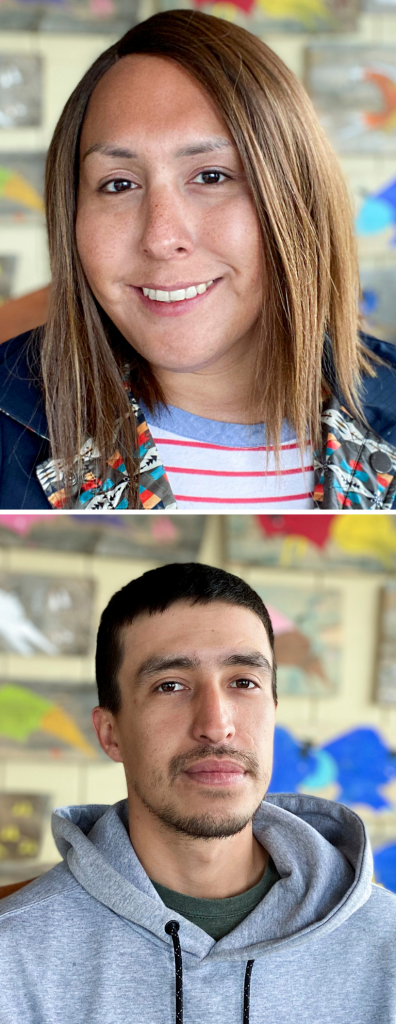 Mila Big Hair's Crow name is Holy Water Drum. Mila grew up on the Crow Indian Reservation in Montana and is 33 this year. Mila participates in the Crow sun dance and other sacred ceremonies and speaks the Crow language. Mila grew up at the Center Pole, her mother Peggy Wellknown Buffalo’s non-profit, and has worked there for about 10 years. Mila attended Guilford College in Greensboro, North Carolina, and the Institute of American Indian Arts in Santa Fe, New Mexico. Mila is a visual artist and sees film as an important tool to build knowledge, justice and awareness in her Native community. She believes her community is her teacher.
David Driftwood's Crow name is Child of the Sundance Whistle. David was born in Wyola, Montana, on the Crow Reservation and has lived there all his life. He is 24 years old. His father died when he was 12. His father instilled a work ethic in him and he began to be industrious, self motivated and interested in helping others at a young age. He grew up assisting his uncle, a filmmaker and teacher, to produce films for Little Big Horn College. He works at the Center Pole, Peggy Wellknown Buffalo’s community organization in community development, particularly in the area of food sovereignty. He has four children: 6, 5, 2 and 1 who are the lights of his life.
Mila Big Hair's Crow name is Holy Water Drum. Mila grew up on the Crow Indian Reservation in Montana and is 33 this year. Mila participates in the Crow sun dance and other sacred ceremonies and speaks the Crow language. Mila grew up at the Center Pole, her mother Peggy Wellknown Buffalo’s non-profit, and has worked there for about 10 years. Mila attended Guilford College in Greensboro, North Carolina, and the Institute of American Indian Arts in Santa Fe, New Mexico. Mila is a visual artist and sees film as an important tool to build knowledge, justice and awareness in her Native community. She believes her community is her teacher.
David Driftwood's Crow name is Child of the Sundance Whistle. David was born in Wyola, Montana, on the Crow Reservation and has lived there all his life. He is 24 years old. His father died when he was 12. His father instilled a work ethic in him and he began to be industrious, self motivated and interested in helping others at a young age. He grew up assisting his uncle, a filmmaker and teacher, to produce films for Little Big Horn College. He works at the Center Pole, Peggy Wellknown Buffalo’s community organization in community development, particularly in the area of food sovereignty. He has four children: 6, 5, 2 and 1 who are the lights of his life.
 The Missouri Rural Crisis Center (MRCC) is a statewide farm and rural membership organization founded in 1985 with over 5600 member families. MRCC’s mission is to preserve family farms, promote stewardship of the land and environmental integrity and strive for economic and social justice by building unity and mutual understanding among diverse groups, both rural and urban. MRCC carries out this mission through its programming areas, each with its own specific role in advocating for family farms and rural communities. Their innovative approach to family farm organizing includes challenging corporate control of the food supply, creating sustainable alternatives to the current farm and food system, and generating community participation to create a just, democratic society based on equity and fairness for all people.
MRCC fights to preserve family farms and independent family farm livestock production, promote stewardship of the land and a safe, affordable high-quality food supply, support social justice and economic opportunity, and engage rural Missourians in public policies that impact their farms, food, families and communities. In addition, MRCC plays leadership roles in national and international efforts for fair farm and trade policies.
The Missouri Rural Crisis Center (MRCC) is a statewide farm and rural membership organization founded in 1985 with over 5600 member families. MRCC’s mission is to preserve family farms, promote stewardship of the land and environmental integrity and strive for economic and social justice by building unity and mutual understanding among diverse groups, both rural and urban. MRCC carries out this mission through its programming areas, each with its own specific role in advocating for family farms and rural communities. Their innovative approach to family farm organizing includes challenging corporate control of the food supply, creating sustainable alternatives to the current farm and food system, and generating community participation to create a just, democratic society based on equity and fairness for all people.
MRCC fights to preserve family farms and independent family farm livestock production, promote stewardship of the land and a safe, affordable high-quality food supply, support social justice and economic opportunity, and engage rural Missourians in public policies that impact their farms, food, families and communities. In addition, MRCC plays leadership roles in national and international efforts for fair farm and trade policies.
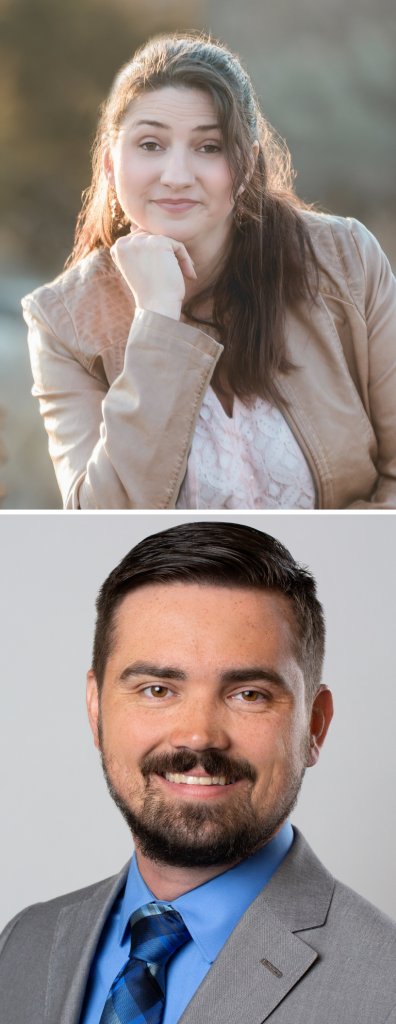 Jamie Blair is a longtime resident of Audrain County, Missouri, hobby gardener, mom, and amateur potato scientist. She became Rural Organizer and de facto Digital Organizer with Missouri Rural Crisis Center in early 2020. She is passionate about MRCC’s mission to curtail corporate control of our food systems and restore the natural relationship between farmers and the land. She is especially devoted to the role that sustainable farming can have on our environment through carbon sequestration, decreased runoff, and responsible water use. She wants to see a day where we can start to achieve carbon drawdown as well as a fair price for the farmers who put food on all of our tables. She loves nothing more than talking with other rural folks and finding ways that we can help them meet their needs and conquer the unique challenges that come with rural life. She also enjoys snuggles from friendly cows, horses, and llamas but makes do with her two dogs and cats for everyday affection.
Erich Arvidson is a Loan Officer in Mid-Missouri. He grew up in Delta, Missouri and now resides in rural Cooper County. He has a boundless curiosity that has led him to master a variety of hobbies and skills such as restoring antique cast iron and vintage video games, as well as soap making and bee keeping.
Jamie Blair is a longtime resident of Audrain County, Missouri, hobby gardener, mom, and amateur potato scientist. She became Rural Organizer and de facto Digital Organizer with Missouri Rural Crisis Center in early 2020. She is passionate about MRCC’s mission to curtail corporate control of our food systems and restore the natural relationship between farmers and the land. She is especially devoted to the role that sustainable farming can have on our environment through carbon sequestration, decreased runoff, and responsible water use. She wants to see a day where we can start to achieve carbon drawdown as well as a fair price for the farmers who put food on all of our tables. She loves nothing more than talking with other rural folks and finding ways that we can help them meet their needs and conquer the unique challenges that come with rural life. She also enjoys snuggles from friendly cows, horses, and llamas but makes do with her two dogs and cats for everyday affection.
Erich Arvidson is a Loan Officer in Mid-Missouri. He grew up in Delta, Missouri and now resides in rural Cooper County. He has a boundless curiosity that has led him to master a variety of hobbies and skills such as restoring antique cast iron and vintage video games, as well as soap making and bee keeping.  Mountain Watershed Association works to preserve, restore, and protect the Indian Creek and greater Youghiogheny River watersheds. These watersheds are located in the Appalachian foothills of Pennsylvania, a region known as the Laurel Highlands. Mountain Watershed Association organization has a unique approach in that they pursue on-the-ground restoration of past coal mining damage while we also advocate to protect our communities from the impacts of continued extraction for coal and, more recently, natural gas. Their work blends environmental monitoring, legal advocacy, and community organizing in order to empower local residents to take action to defend the waterways and communities they love.
 James Cato is a Community Organizer with Mountain Watershed Association. He lives in Pittsburgh, PA and he graduated from Oberlin College in 2020 with a degree in Environmental Studies. His organizing work focuses on the impacts of the petrochemical buildout in the Ohio River Valley. In his off time, he publishes speculative fiction about rural environmental issues, hoping to contribute to a greater narrative movement.
Stacey Magda is a community organizer with Mountain Watershed Association and lives along the Chestnut Ridge in the Laurel Highlands. She focuses on engaging communities around coal mining developments, fracking waste stream impacts, and defending the celebrated and endangered Youghiogheny River. Her deep appreciation of the area and natural resources feeds her passion for this work. When she isn't hosting community meetings and working on environmental impacts, she enjoys exploring rivers and trails with her young daughter and family.
.
James Cato is a Community Organizer with Mountain Watershed Association. He lives in Pittsburgh, PA and he graduated from Oberlin College in 2020 with a degree in Environmental Studies. His organizing work focuses on the impacts of the petrochemical buildout in the Ohio River Valley. In his off time, he publishes speculative fiction about rural environmental issues, hoping to contribute to a greater narrative movement.
Stacey Magda is a community organizer with Mountain Watershed Association and lives along the Chestnut Ridge in the Laurel Highlands. She focuses on engaging communities around coal mining developments, fracking waste stream impacts, and defending the celebrated and endangered Youghiogheny River. Her deep appreciation of the area and natural resources feeds her passion for this work. When she isn't hosting community meetings and working on environmental impacts, she enjoys exploring rivers and trails with her young daughter and family.
.
 Founded in 2009, the Partnership for Southern Equity (PSE) advances policies and institutional actions that promote racial equity and shared prosperity for all in the growth of Atlanta and the American South. PSE advances its work through an Equity Ecosystem to grow the momentum for change. The Equity Ecosystem uses equity as the lens to propose and pursue just and equitable solutions. Through Values-Based Organizing, community engagement, coalition building, and leadership development, PSE works with communities to promote just energy policies in Georgia and across the American South. A big part of that is helping people understand where their energy comes from, how that affects them, and how they can get involved. Racial equity is utilized as a framework for mobilizing advocacy around energy equity issues. Mobilization takes on many forms including the Just Energy Circle, which is made up of like-minded frontline community organizations and individuals looking to advance a “New Southern Agenda” in the fight against climate injustice.
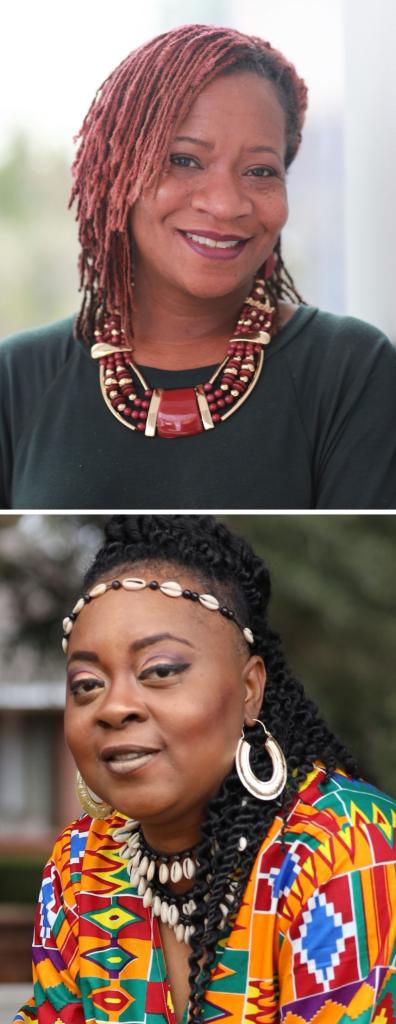 Marsha Gosier is the Central and Southwest Georgia Organizer for the
  The Rural Utah Project is dedicated to increasing civic engagement in rural communities across Utah. We’re a young organization and are motivated to build a powerful movement with our neighbors that fights for a more just and sustainable future for rural Utah’s communities and landscapes. We seek to expand civic participation by breaking down barriers to the ballot box and providing organizing tools to local communities.
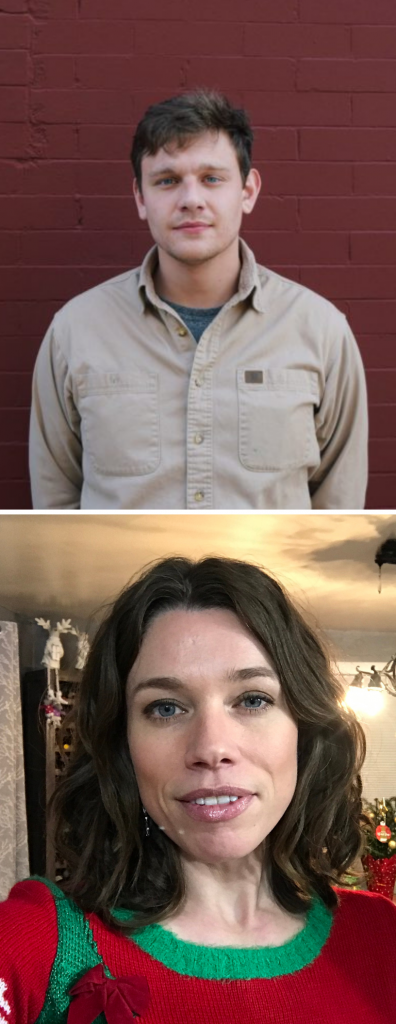 Nate Vosburg is a community and labor organizer having worked for political campaigns and unions across the country. Now based in southeastern Utah, his work with the Rural Utah Project focuses on voting rights and civic engagement, economic justice for workers, and just transition advocacy.
Krystyna has lived and worked on the Colorado Plateau since 1992, first in Grand Junction, CO, now in Moab, UT. After ten years teaching high school and middle school mathematics, she refocused her energy on public lands, community development, and the environment with Public Land Solutions as Executive Coordinator and Technology Manager. An avid hiker, trail runner, and explorer, she holds a B.S. in Physics, an M.A. in Education and is currently working on a graduate degree in Natural Resources from Utah State University. She recently joined the board of KZMU 90.1, a local radio station, and volunteers with other organizations in the area. On the weekends she can be found roaming the desert with her dog, Beau.
.
Nate Vosburg is a community and labor organizer having worked for political campaigns and unions across the country. Now based in southeastern Utah, his work with the Rural Utah Project focuses on voting rights and civic engagement, economic justice for workers, and just transition advocacy.
Krystyna has lived and worked on the Colorado Plateau since 1992, first in Grand Junction, CO, now in Moab, UT. After ten years teaching high school and middle school mathematics, she refocused her energy on public lands, community development, and the environment with Public Land Solutions as Executive Coordinator and Technology Manager. An avid hiker, trail runner, and explorer, she holds a B.S. in Physics, an M.A. in Education and is currently working on a graduate degree in Natural Resources from Utah State University. She recently joined the board of KZMU 90.1, a local radio station, and volunteers with other organizations in the area. On the weekends she can be found roaming the desert with her dog, Beau.
.
 The COVID-19 crisis inside California prisons has claimed the lives of over 200 incarcerated people and infected tens of thousands more. This film tracks the origins of COVID-19 inside the California state prison system and a newly formed coalition, led by currently and formerly incarcerated people, that brought forward an abolitionist framework to a life or death situation.
  Space to Breathe
 Every Monday night, Michelle Griffin dials into WMMT-FM community radio’s
  Pen Pals
 When an unlikely duo discovers a pattern of illegal sterilizations in women’s prisons, they wage a near impossible battle against the Department of Corrections. Filmed over seven years with extraordinary access and intimate accounts from currently and formerly incarcerated people,