We are pleased to announce the five locations and community leaders selected for Rural Cinema 2023: Kansas Rural Center and Prairie Band Potawatomi Nation (Prairie Band Potawatomi Nation), Environmental Justice Community Action Network (Sampson County NC), 7 Directions of Service…
We are pleased to announce the five locations and community leaders selected for
Rural Cinema 2023:
Kansas Rural Center and Prairie Band Potawatomi Nation (Prairie Band Potawatomi Nation),
Environmental Justice Community Action Network (Sampson County NC),
7 Directions of Service (Pleasant Grove, NC), Safe, Affordable, Good Energy (SAGE TN) (Cookeville, TN), and
Iowa CCI (Scott County, Iowa).
Rural Cinema is a training institute and community engagement program aimed at supporting community leaders located in rural areas and small towns across the United States to utilize documentary films to advance their local efforts to move people to action on critical issues facing their area.
This year’s cohort will participate in Rural Cinema’s virtual training institute covering Working Films’
Eight Elements of Putting Films to Work, a curriculum focused on best practices for using documentary film for change. At the end of the training and through individualized consultation, community leaders will organize multiple screening events over the course of the year.
Each organization will receive $7,500 in monetary support and
EPIC Outdoor Cinema solar-powered film screening equipment (projectors, screens, speakers, etc.).
Meet the 2023 Rural Cinema cohort:
7 Directions of Service

Founded by frontline activists
Dr. Crystal Cavalier-Keck and
Jason Crazy Bear Keck,
7 Directions of Service (7DS) is an Indigenous-led environmental justice and community organizing collective based on Crystal’s ancestral Occaneechi-Saponi homelands in rural North Carolina. Their mission involves canceling the Mountain Valley Pipeline/Southgate Extension and campaigning for legal Rights of Nature laws in North Carolina. 7DS is striving towards a long-term vision of rematriation and Indigenous-led food justice by developing its community garden into a hands-on learning and cultural center.
 Dr. Crystal Cavalier-Keck
 is a citizen of the Occaneechi Band of the Saponi Nation and she has dedicated the past 5+ years to defending her homelands against the Mountain Valley Pipeline/Southgate Extension. She is leading a campaign to bring Rights of Nature laws to North Carolina to protect the waterways and communities in the path of the pipeline. Crystal completed her Doctorate at the University of Dayton, focusing on the social justice epidemic of Missing Murdered Indigenous Women (MMIW) tied to gas and oil pipelines. This led her to launch the Missing Murdered Indigenous Women Coalition of North Carolina. Crystal serves on the boards of Movement Rights, The Haw River Assembly, The Women’s Resource Center, and Benevolence Farm, and is Policy Director at Toxic Free, North Carolina.
 Jason Crazy Bear Keck
 is the co-founder of 7 Directions of Service with his wife, Crystal. With a multiracial heritage as Choctaw-Apache, French African Creole, and European, Jason’s leadership is driven by the power of grassroots solidarity and bridge-building across differences. He is the former VP of outreach for an international men’s organization and currently leads programming for men and boys that foster Indigenous values and healthy male identities. Jason is a board member of Benevolence Farm, President of the Alamance County Native American Caucus, and the Communications Director of the 17 Rivers North Carolina Chapter of the American Indian Movement.
Learn more:
https://7directionsofservice.com/.
Iowa CCI

The mission of
Iowa CCI is to empower and unite grassroots people of all ethnic backgrounds to take control of their communities; involve them in identifying problems and needs and in taking action to address them; and be a vehicle for social, economic, and environmental justice.
 Toby Raine
 is one of CCI’s Membership and Database Coordinators. He is involved in cleaning up member data, creating strategies for member growth and retention, and coordinating fundraising efforts. He came to CCI after several years of working for the Polk County District Court. Frustrated by the lack of public resources within the Justice System, Toby realized he wanted to be part of an organization dedicated to positive change rather than one that maintains the status quo. He is originally from a tiny town in southwest Iowa and went to a high school surrounded by corn and soybean fields. In his spare time, he likes to crochet, sew, read, and travel the Midwest with his partner.
 Ava Auen-Ryan
 started as Farm & Environment Organizer in July of 2018 and worked with CCI for three years before going on a vision quest to Ohio. Ava moved back to Iowa and rejoined the staff in November of 2022. Some of her favorite memories growing up in Iowa are playing in the crick on her grandparent’s farm, going fishing in the driftless region of the state, and the views of the Mississippi from her backyard in a small town in Southeast Iowa.
Learn more:
https://www.iowacci.org/.
Environmental Justice Community Action Network
 Environmental Justice Community Action Network
 (EJCAN) is an organization focused on, and dedicated to, achieving environmental justice around North Carolina. EJCAN focuses on issues that have a significant impact on health, economic outcomes, and quality of life for residents in the state.
 Sherri White-Williamson
 co-founded EJCAN along with colleagues from Vermont Law School in July 2020. Since moving back to North Carolina she has worked to empower local community members to advocate for change in Sampson County. To date, the organization has helped to prevent contaminated soil from being dumped at the local landfill – the largest in the state. EJCAN continues to work in collaboration with university partners to provide free water testing for residents.
Learn more:
https://www.ejcan.org/.
Kansas Rural Center and Praire Band Potawatomi Nation

The mission of
Kansas Rural Center is to promote the long-term health of the land and its people through research, education, and advocacy that advance an economically viable, ecologically sound, and socially just food and farming system.The Kansas Rural Center will be working with members of
Prairie Band Potawatomi Nation located on Prairie Band Potawatomi land, currently known as Jackson County, Kansas.
 Mikayla “MK” Kerron
 is an Environmental/GIS Technician for the
Prairie Band Potawatomi Nation where she coordinates the Clean Water Act 319 Nonpoint Source Pollution, Wetlands, and GIS Programs. She holds a B.A. in Indigenous and American Indian Studies from Haskell Indian Nations University where she focused her studies on climate change in Indigenous communities and Traditional Ecological Knowledge. Mikayla is an enrolled member of the Wichita & Affiliated Tribes in Oklahoma and is also a descendent from the Muscogee Creek Nation, Makah, and Quileute Tribes. Prior to her job with Prairie Band she was also a GAP Technician in the Environmental Programs Department for the Wichita & Affiliated Tribes and also a Bureau of Indian Affairs Intern for the Southeast Climate Adaptation Science Center at North Carolina State University. She will continue her studies at the University of Kansas to receive a M.S. in Geography and further her research climate change in Indigenous communities and TEK.
 Jackie Keller
 is the Sunflower Stories Program Coordinator for the Kansas Rural Center (KRC), a non-profit organization founded in 1979 that has been working with communities across Kansas on environmental issues since its inception. KRC’s mission is “To promote the long-term health of the land and its people through research, education and advocacy that advance an economically viable, ecological sound, and socially just food and farming system.” Jackie has been closely involved with KRC for over 20 years, much of which was spent serving on the board. Jackie earned a M.A. degree in International Relations from San Francisco State University with an emphasis on Environmental Policy, thesis topic was Sustainable Agriculture. She’s worked with diverse communities at Food First in Oakland, CA, Global Exchange and the San Francisco Departments of Agriculture and Environment. In 2000, she moved back to Kansas and transitioned her parent’s 200 acre conventional crop ground to organic, attaining certification in 2004. She’s been awarded the NRCS Water Quality Award for Shawnee County and the John Vogelsberg Sustainable Agriculture Award. Jackie has served on her Farm Service Agency (FSA) County Committee for twelve years. For almost thirty years she has advocated for healthy soil, water and food access, and social justice.
Learn more:
https://kansasruralcenter.org/ and
https://www.pbpindiantribe.com/.
Safe, Affordable, Good Energy (SAGE TN)
 Safe, Affordable, Good Energy for Tennessee
 (SAGE TN) brings together community members in Tennessee’s Upper Cumberland fighting a proposed “natural” gas pipeline in their. The 122-mile Ridgeline Expansion Project would be owned by Enbridge, but is part of the Tennessee Valley Authority’s proposal to replace their coal-powered Kingston Fossil Plant with gas. Formed at the end of 2022, SAGE is working to stop these gas plans and instead urging TVA to choose a cleaner, more affordable plant replacement. SAGE TN believes in energy systems that support clean water, public safety, and environmental justice, and envision a future of local and sustainable energy in the Upper Cumberland.
 Gabi Lichtenstein
 is the Tennessee Energy Democracy Field Coordinator with Appalachian Voices. She organizes alongside SAGE TN and other communities impacted by TVA’s proposed gas replacement for the Kingston Fossil Plant. While pursuing her M.A. in geography, Gabi became active in the labor movement, organizing with co-workers at the United Campus Workers of Georgia (UCWGA). Her graduate research focused on power shutoffs and utility justice, and followed several years working to support energy democracy. Gabi is committed to transformative change led by impacted communities. She enjoys mountain hikes, outdoor concerts, and growing things.
 Breanna Ortner
 is a Media and Event Coordinator with SAGE TN. Brea grew up in rural Arkansas, but has lived in Cookeville for the last six years and is proud to call Tennessee home. They are so excited to combine their two great loves of theatre and activism. While you’re more likely to see them standing on the Square with a protest sign than on the stage, Brea has assisted in numerous local productions, namely CPAC’s The Complete Works of Shakespeare Abridged and Cookeville Theatre Company’s I am My Ancestors’ Wildest Dream. They would like to thank Working Films, Gabi with Appalachian Voices, the Universalist Unitarian Congregation and all SAGE TN’s volunteers. They give special love and thanks to their ever supportive husband Zac, Sisters Sam and Emily, and their forever found theatre family.
For regular updates on the Rural Cinema 2023 cohort, follow Working Films on Twitter and Instagram.
Applications for Rural Cinema 2024 will open in late Winter 2023.
Rural Cinema is made possible with generous support from the Kendeda Fund, Perspective, Putnam Foundation, and the Z. Smith Reynolds Foundation.
Download the press release here.









 Directed by Maya Cueva; Produced by Mayra Amaya and Melissa Bueno-Woerner; Featuring Alejandra Pablos
Run time: 17 minutes
Alejandra is a criminalized organizer and unapologetic immigrant. While she prepares for one of the biggest moments of her life — her deportation case — Alejandra is forced to reckon with a past mistake and a system that could tear her apart from her family and the only home she has ever known.
Directed by Maya Cueva; Produced by Mayra Amaya and Melissa Bueno-Woerner; Featuring Alejandra Pablos
Run time: 17 minutes
Alejandra is a criminalized organizer and unapologetic immigrant. While she prepares for one of the biggest moments of her life — her deportation case — Alejandra is forced to reckon with a past mistake and a system that could tear her apart from her family and the only home she has ever known.
 Directed by Christian Rozier; Executive Produced by Douglas Miles Jr. and Glen Lineberry; Produced by Selina Curley, Carrie Curley, and Douglas Miles Sr.
Run time: 84 minutes
Apache artist Keane is forced into a desperate mission to get a job before the deadline passes and his dreams evaporate, all while confronting family stresses, enemies from his past, and an unpredictable old car. Produced on location in the San Carlos Apache Reservation and the neighboring city of Globe, Arizona, this independent feature explores the extraordinary beauty and the unique challenges of these two communities, and the scorching ribbon of highway that connects them together.
Directed by Christian Rozier; Executive Produced by Douglas Miles Jr. and Glen Lineberry; Produced by Selina Curley, Carrie Curley, and Douglas Miles Sr.
Run time: 84 minutes
Apache artist Keane is forced into a desperate mission to get a job before the deadline passes and his dreams evaporate, all while confronting family stresses, enemies from his past, and an unpredictable old car. Produced on location in the San Carlos Apache Reservation and the neighboring city of Globe, Arizona, this independent feature explores the extraordinary beauty and the unique challenges of these two communities, and the scorching ribbon of highway that connects them together.
 Directed & Produced by Chelsea Hernandez; Executive Produced by Marcy Garriott; Produced by Marisol Medrano Montoya; Co-Produced by Mario Troncoso and Iliana Sosa
Run time: 56 minutes
Across Texas an unstoppable construction boom drives urban sprawl and luxury high-rises. Its dirty secret: abuse of immigrant labor. Building the American Dream captures a turning point as a movement forms to fight widespread construction industry injustices. Grieving their son, a Mexican family campaigns for a life-and-death safety ordinance. A Salvadorian electrician couple owed thousands in back pay fights for their children’s future. A bereaved son battles to protect others from his family’s preventable tragedy. A story of courage, resilience and community, the film reveals shocking truths about the hardworking immigrants who build the American Dream, of which they are excluded.
Directed & Produced by Chelsea Hernandez; Executive Produced by Marcy Garriott; Produced by Marisol Medrano Montoya; Co-Produced by Mario Troncoso and Iliana Sosa
Run time: 56 minutes
Across Texas an unstoppable construction boom drives urban sprawl and luxury high-rises. Its dirty secret: abuse of immigrant labor. Building the American Dream captures a turning point as a movement forms to fight widespread construction industry injustices. Grieving their son, a Mexican family campaigns for a life-and-death safety ordinance. A Salvadorian electrician couple owed thousands in back pay fights for their children’s future. A bereaved son battles to protect others from his family’s preventable tragedy. A story of courage, resilience and community, the film reveals shocking truths about the hardworking immigrants who build the American Dream, of which they are excluded.
 Directed by Princeton James; Assistant Directors: Sequoia Gray and Angel Clark; Produced by Princeton James and the Memphis Music Initiative; Screenplay Written by Amber Hamilton
Run time: 9 minutes
In this commentary on the nonprofit fundraising process, Memphis Music Initiative’s (MMI) Executive Director Amber Hamilton explains (with help from Harriet Tubman) why current philanthropic practices are inequitable, unhelpful, and nonsensical. But these practices can be changed. Through its Call & Response initiative, MMI is modeling a new way of thinking about grantmaking, funding, and equity in the arts. Black Pay Matters. Black Legacy Matters. Black Rest Matters.
Directed by Princeton James; Assistant Directors: Sequoia Gray and Angel Clark; Produced by Princeton James and the Memphis Music Initiative; Screenplay Written by Amber Hamilton
Run time: 9 minutes
In this commentary on the nonprofit fundraising process, Memphis Music Initiative’s (MMI) Executive Director Amber Hamilton explains (with help from Harriet Tubman) why current philanthropic practices are inequitable, unhelpful, and nonsensical. But these practices can be changed. Through its Call & Response initiative, MMI is modeling a new way of thinking about grantmaking, funding, and equity in the arts. Black Pay Matters. Black Legacy Matters. Black Rest Matters.
 Directed by Adetoro Makinde; Featuring Tyrese Alleyne-Davis
Run time: 6 minutes
In the middle of the pandemic and protests for racial justice, Tyrese Allyene-Davis a disabled Black youth, celebrated his 21st birthday isolated in his NYU dorm room. Following a screening of I Am Not Your Negro, his introduction to James Baldwin pushes him into a visceral call for help in a Facebook post. Shot on Super 8mm film, this experimental documentary short expands on his audio to capture the mental exploration of his thoughts with hauntingly poetic moments of intimacy, pain and celebration.
Directed by Adetoro Makinde; Featuring Tyrese Alleyne-Davis
Run time: 6 minutes
In the middle of the pandemic and protests for racial justice, Tyrese Allyene-Davis a disabled Black youth, celebrated his 21st birthday isolated in his NYU dorm room. Following a screening of I Am Not Your Negro, his introduction to James Baldwin pushes him into a visceral call for help in a Facebook post. Shot on Super 8mm film, this experimental documentary short expands on his audio to capture the mental exploration of his thoughts with hauntingly poetic moments of intimacy, pain and celebration.
 Directed by Paris Hatcher; Executive Produced by Black Feminist Future; Produced by Chisom Chieke; Co-Produced by Crystal Des-Ogugua
Run time: 95 minutes
Jubilee: A Black Feminist Homecoming celebrates the legacy, power, and possibilities of Black feminisms, following the August 28, 2021, event that uplifted a colorful and expansive production of performers, liberators, and guiding stars that told the story of Black feminist activism, unveiled the Black Feminist Platform, with concrete actions to take toward liberation.
Directed by Paris Hatcher; Executive Produced by Black Feminist Future; Produced by Chisom Chieke; Co-Produced by Crystal Des-Ogugua
Run time: 95 minutes
Jubilee: A Black Feminist Homecoming celebrates the legacy, power, and possibilities of Black feminisms, following the August 28, 2021, event that uplifted a colorful and expansive production of performers, liberators, and guiding stars that told the story of Black feminist activism, unveiled the Black Feminist Platform, with concrete actions to take toward liberation.
 Directed by Ivey Camille Manybeads Tso; Produced by Jordan Flaherty, Emily Faye Ratner, and Ewa JasiewiczRun time: 75 mins.
A young Navajo filmmaker, Ivey Camille Manybeads Tso, investigates displacement of Indigenous people and devastation of the environment around the globe caused by the same chemical companies that have exploited the land where she was born. On this personal and political journey she learns from Indigenous activists across three continents.
Directed by Ivey Camille Manybeads Tso; Produced by Jordan Flaherty, Emily Faye Ratner, and Ewa JasiewiczRun time: 75 mins.
A young Navajo filmmaker, Ivey Camille Manybeads Tso, investigates displacement of Indigenous people and devastation of the environment around the globe caused by the same chemical companies that have exploited the land where she was born. On this personal and political journey she learns from Indigenous activists across three continents.
 Directed by Fearless Video; Produced by Echoing Green and Fearless Video with support from Comcast NBCUniversal
Run time: 25 minutes
Featuring interviews with Dr. Cory Greene (also featured in Ava DuVernay’s 13th), architect and activist Deanna Van Buren, gaming and tech educator Damon Packwood, and award-winning social entrepreneur and nonprofit leader Dr. Cheryl Dorsey, Unwavering explores chronic underfunding of Black-led organizations, all the while celebrating the optimism and perseverance of Black innovators from across the United States.
Directed by Fearless Video; Produced by Echoing Green and Fearless Video with support from Comcast NBCUniversal
Run time: 25 minutes
Featuring interviews with Dr. Cory Greene (also featured in Ava DuVernay’s 13th), architect and activist Deanna Van Buren, gaming and tech educator Damon Packwood, and award-winning social entrepreneur and nonprofit leader Dr. Cheryl Dorsey, Unwavering explores chronic underfunding of Black-led organizations, all the while celebrating the optimism and perseverance of Black innovators from across the United States.
 Directed and Produced by Eli Jacobs Fantauzzi; Produced by Kahlil Jacobs-Fantauzzi, Michael Shawn Cordero, Frances Medina, and Mensajeros De Palomas
Run time: 54 minutes
We Still Here introduces the incredible youth of Comerío, Puerto Rico navigating the aftermath of Hurricane Maria, a disaster that brought an unprecedented level of devastation to an island already in economic and political crisis. In the lush mountains in the center of Puerto Rico, 24-year-old Mariangelie Ortiz leads a group of young residents who never thought they would become the leaders of their community, nonetheless find themselves traveling to Washington D.C. to protest in the halls of Congress. Follow them in this coming of age story as they find their power and begin creating a sustainable future for themselves and their community.
Directed and Produced by Eli Jacobs Fantauzzi; Produced by Kahlil Jacobs-Fantauzzi, Michael Shawn Cordero, Frances Medina, and Mensajeros De Palomas
Run time: 54 minutes
We Still Here introduces the incredible youth of Comerío, Puerto Rico navigating the aftermath of Hurricane Maria, a disaster that brought an unprecedented level of devastation to an island already in economic and political crisis. In the lush mountains in the center of Puerto Rico, 24-year-old Mariangelie Ortiz leads a group of young residents who never thought they would become the leaders of their community, nonetheless find themselves traveling to Washington D.C. to protest in the halls of Congress. Follow them in this coming of age story as they find their power and begin creating a sustainable future for themselves and their community.
 Directed and Produced by Pita Juarez and Matty SteinkampRun time: 60 minutes
Featuring first-voice stories of discrimination and hope, ‘You Racist, Sexist, Bigot’ was conceived and filmed in Arizona but tells truly – and sadly – American stories. From the story of a young black male raised in Ferguson, MO, to the account of an undocumented transgender woman living and working in a state where immigrant rights is more than just a headline, each writer shares an intimate, powerful message of their understanding of the bigotry they face daily. With an original soundtrack which speaks of love, justice, and the need for family and community, You Racist, Sexist, Bigot follows the struggles that occur every day not just in Arizona but in neighborhoods and cities all across the United States.
Directed and Produced by Pita Juarez and Matty SteinkampRun time: 60 minutes
Featuring first-voice stories of discrimination and hope, ‘You Racist, Sexist, Bigot’ was conceived and filmed in Arizona but tells truly – and sadly – American stories. From the story of a young black male raised in Ferguson, MO, to the account of an undocumented transgender woman living and working in a state where immigrant rights is more than just a headline, each writer shares an intimate, powerful message of their understanding of the bigotry they face daily. With an original soundtrack which speaks of love, justice, and the need for family and community, You Racist, Sexist, Bigot follows the struggles that occur every day not just in Arizona but in neighborhoods and cities all across the United States.


 When Ruby Duncan faces harassment by a fraud-obsessed welfare department, she ignites “Mother Power” mobilizing a welfare rights group to fight for justice, dignity, democratic participation, and an adequate income. With low-income mothers across the country, and two radicalized professors George Wiley and Frances Fox Piven, they form the National Welfare Rights Organization (NWRO). In 1972, with feminist Gloria Steinem, the NWRO campaigns for a guaranteed income. When thousands of Las Vegas families are slashed from the welfare rolls, Ruby calls the NWRO and launches “Operation Nevada.” They lead an army—including Ralph Abernathy and Jane Fonda—down the Strip into Caesars Palace, shutting it down. From protesters to lobbyists to founders of an anti-poverty community center, Ruby proves her mantra, “we can do it and do it better.” Featuring lost archival footage and a cast who played pivotal roles in these events, Storming Caesars Palace reveals that it is the disenfranchised who stand up for America’s principle of justice for all.
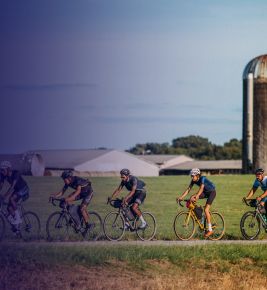
 On the heels of 2020's global protests for social justice and the run-up to the US presidential elections, five Black and Latinx cyclists led by NYC-based messenger, John “Bobby” Shackelford attempt to traverse a route inspired by the Underground Railroad which led many enslaved Black people to freedom in the 1800s. Riding alongside the magnetic Bobby - Richard Carson, a camera-shy cyclocross racer from Indianapolis; Rashad Mahoney, a soft-spoken bike mechanic in Baltimore who loves the outdoors; Edwardo Garabito, a gregarious Latinx custom bike builder at a NYC shop and Alex Olbrich, a spirited DC bike salesman of Ghanaian-German heritage. They seek agency to combat the lack of representation in the ultra white world of cycling and to inspire BIPOC kids with their representation of Black manhood. Over the course of 17 days, as each man attempts this ambitious athletic feat, the challenges of the road transform them in this thought-provoking and complex tale of freedom and identity.
 Impact Kickstart is supported by the Fledgling Fund, Ford Foundation,
John D. and Catherine T. MacArthur Foundation, and Perspective Fund.
Impact Kickstart is supported by the Fledgling Fund, Ford Foundation,
John D. and Catherine T. MacArthur Foundation, and Perspective Fund.